
Behind The Scenes with Brooks Pettit

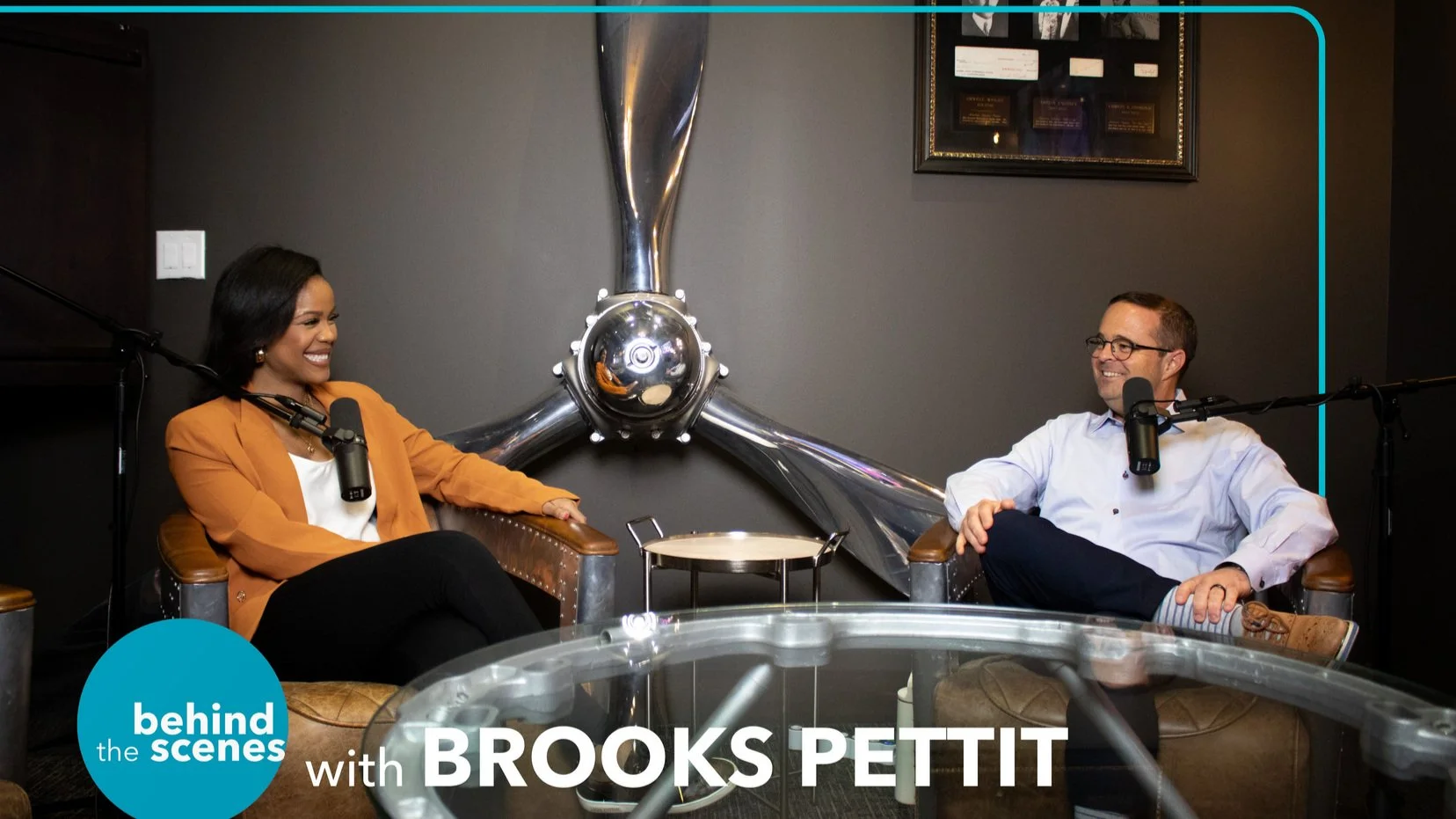
Behind the Scenes with TK Business Magazine is a new podcast series hosted by Danielle J. Martin, delving into the innovation that fuels the growth of the Topeka community: local businesses. The beauty of this new podcast is that we travel to our subjects and interview them at their office or workspace.
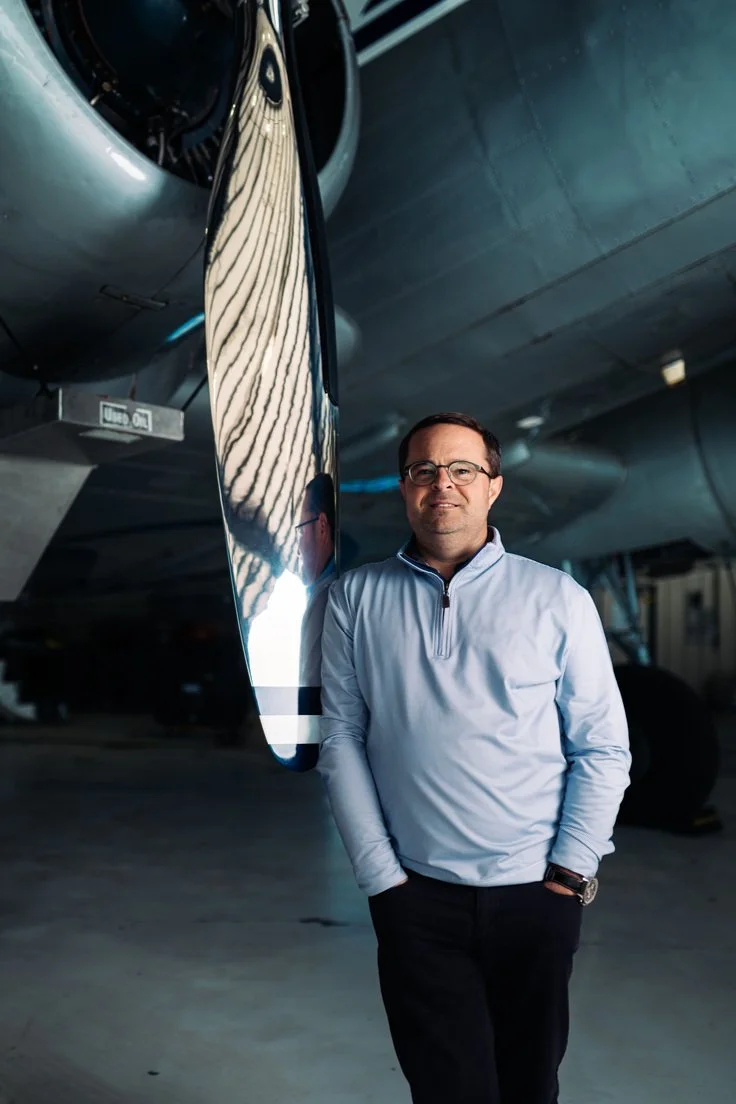
Brooks Pettit is the president and founder of Vaerus Aviation, a private aviation management company based in Topeka, Kansas, with additional offices in Scottsdale, Arizona. Vaerus Aviation has been providing comprehensive services to private aircraft owners, including operations, maintenance, pilot staffing, taxation, accounting and aircraft transactions since 2007.
A Kansas native, Pettit has grown Vaerus Aviation from a modest startup into a company employing more than 60 people. His leadership approach emphasizes customer care, safety culture and a genuine passion for the client.
Martin: Take me back to 2007 when you founded Vaerus Aviation. What was that like?
Pettit: Our business was not one that was purposely built, it was more happenstance. There was a lot of economic turmoil happening at the time. 2007 was still a pretty good year, but the private aviation business in our community was very limited. When I started, I was a one-man band. I had one little customer I got because he had a pilot flying for him that was a friend of mine, and the guy needed to leave for a job interview and he asked me to fill in. The guy got the job and he moved to Dallas.
All of a sudden, I’ve got one little airplane to fly and one little customer, Greg Schwerdt. Eighteen years later, we’re still doing business together. He was a big catalyst. He helped put me in front of other members of our community that need aviation services. Greg and our other earliest customers helped us grow. We had a lot of people help us get to the next step. In 2007, it was just me, myself and I. I washed the airplanes, flew the airplanes, did the accounting and managed the maintenance. Now we have north of 60 employees here in Topeka.
Martin: Where did your passion for airplanes come from?
Pettit: It’s all nostalgia for me. I’m a third-generation pilot. My grandfather flew P-38s in World War II, but I never met him. He died when my dad was young. Then my dad was a pilot and kind of worked his way through college flying professionally. He owned a manufacturing company, but he always owned corporate or business airplanes that he would buy and sell. So, I grew up flying with my dad and he was a very active member of the Combat Air Museum here in Topeka. Until about 1996, the Combat Air Museum actually flew airplanes. As a kid, I grew up riding around in those old airplanes with my dad. The history is neat for me.
Martin: You mentioned being in business for 18 years. When was the turning point when you saw the business take off?
Pettit: There was a point when I realized that, when I was the only one flying, I was kind of getting run thin. But I also realized there was an absolute cap on my ability to create revenue, and all I had to sell was my time. The limiting factor was how much value can I derive from my time? How much can I charge per day to fly? The reality is that you reach a point where you just can’t, the market doesn’t support a continuous growth of daily-rate pilot services. So, the business model changed and the demand outgrew my ability to take care of our clients. But then I realized that to provide a good caliber of service, I can’t do it all. You have to start specializing in diluting the work you do and focusing on growing the business.
Martin: Talk to me about the people you serve.
Pettit: All of our clients are companies and businesses here in our community. We have an office in Scottsdale, Arizona, as well. They’re all well-known businesses in our community that have big employee bases.
Martin: What advice do you wish you’d known when you were building the business?
Pettit: Can I flip the narrative and talk about what I’m glad I didn’t know? I’m glad I didn’t know how hard it would be because I don’t know that I would have done this if I’d known what a grueling pace it would be to get to where we’re at, or even where we were five years ago. I wouldn’t go back and do anything different. When people ask me how we made it through, the answer is that we didn’t have any debt. We didn’t have any debt because we didn’t have the ability to have any debt. We didn’t have the revenue to support debt, and we didn’t lead off by buying a bunch of expensive equipment and that sort of thing. It was all organic growth and we didn’t take on burdens that we couldn’t have supported. So, we maybe could have grown faster, but we would’ve done so in an unhealthy way. Eighteen years is a long time, so we had a lot of time to get to where we’re at now.
Martin: Talk to me about the challenges you’ve had to work through. What was your “why” that kept you going?
Pettit: This is all I’ve ever known and all I’ve ever wanted to do. I literally didn’t know that I could envision or think about anything else. I’m always interested in the art of the deal and growth. I get bored when we’re not growing. So I think that’s a part of the “why,” but it’s also the interaction with our customers. I love people, and getting to know some of our customers really well has opened up the world for me. They’ve contributed to my personal growth.
Martin: Talk to me about your company culture and how you grew a team of 60 people.
Pettit: Thoroughbreds don’t like to run with donkeys. If you build an organization full of thoroughbreds and don’t let donkeys remain in your company, I think that’s probably the biggest thing. We fight for culture, we focus on culture, we communicate, we spend. We just had an all-employee meeting this morning. We do every couple of weeks or every other week, and we spend the first half of the meeting talking about our “why.” We have a set of core values we call the “Vaerus Way.” It’s the guiding principle behind every decision we make, every human interaction we have. We focus on communication. Communication is inherently a big deal in aviation from a safety standpoint, so it’s easy to combine that into what we do. When you focus on a really strong safety culture, it helps you focus on the people culture. We also do a lot of studying and reading. We have a leadership book club that we do every couple of weeks.
Martin: What’s your favorite business book you’ve read so far?
Pettit: Right now we’re reading “Unreasonable Hospitality” by Will Guidara, which is a great book. I’m also reading “Parenting With Love and Logic,” a parenting book. “The Coddling of the American Mind” is a great book. Probably my favorite book is “Shoe Dog” by Phil Knight, the founder of Nike. I love that book because when you listen to one of the founders of one of the most successful brands, you see everything they went through to get where they are.
Martin: You talked about how surrounding yourself with great people has been key. How would you say those relationships helped you get to the next level?
Pettit: People that are great people radiate goodness and positive energy. If they keep good company, they attract good company. It’s tough to create a good company culture, and you always have to fight to maintain it. But once you have that culture, you can proactively maintain it. If somebody doesn’t fit or feel comfortable here, they solve their own problems and tend to exit themselves from the business before we have to do it for them. It’s not that we’re not willing to exit somebody that doesn’t fit in our culture, and it doesn’t mean they’re a bad person. Sometimes it just means they don’t fit in our culture.
Martin: What’s something many people may not see or understand about what goes on with your company behind the scenes?
Pettit: Oh, there’s so much complexity to doing aviation. Our mantra is we make aviation safe and simple. Think of the analogy of the duck gracefully swimming in the pond, but it’s paddling hard underneath. That analogy works here. The regulatory environment is probably the biggest element from a financial, tax and risk mitigation standpoint. Lots of complexity, but also a lot of subjectivity. Even airplane maintenance is not as black and white as you might think.
Martin: What’s next for Vaerus Aviation?
Pettit: Right now we’re focusing on growing the aircraft sales side and maintenance side of the business. We’ve publicly announced that we’re going to be building another facility similar to this one, just right across the way, which will effectively double the size of our footprint and give us the capacity to keep growing. Right now, our growth is limited by our footprint. Finding and hiring competent, talented people is another limiting factor.
Martin: What advice would you give to people who are new or aspiring entrepreneurs?
Pettit: Those who know me well know that I am never shy of having an opinion, and I’m trying to learn to be the last one in the room to speak, which is naturally very difficult for me to do. What I’ve learned is that I’m surrounded by so many brilliant people in our organization. If I can focus on having less of an opinion, it can be pretty amazing to see other people flourish and do things better than I ever did when I was doing their job.