
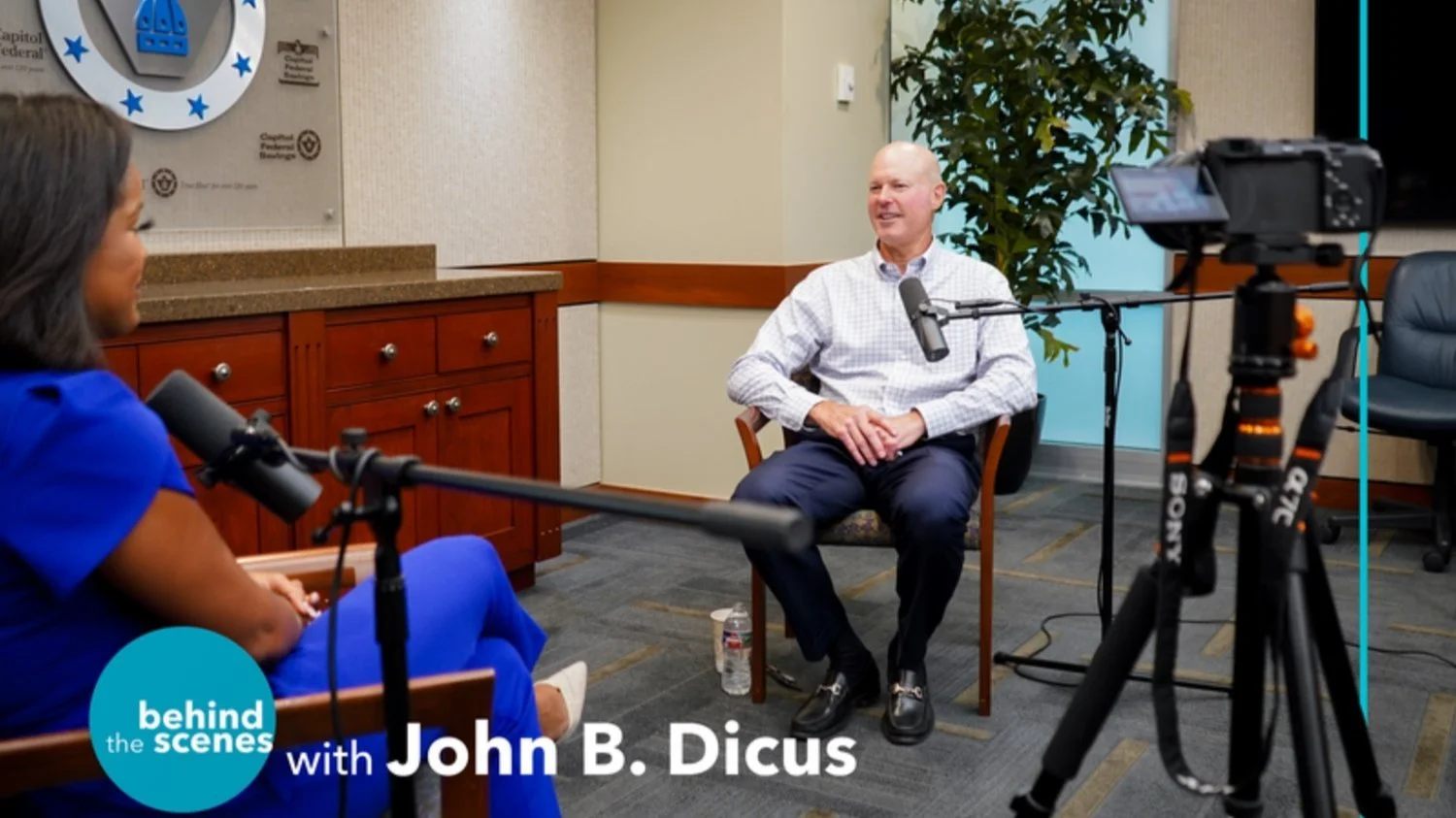
Behind the Scenes | Spotlighting John B. Dicus

Behind the Scenes with TK Business Magazine is a podcast series hosted by Danielle J. Martin, delving into the innovation that fuels the growth of the Topeka community: local businesses.
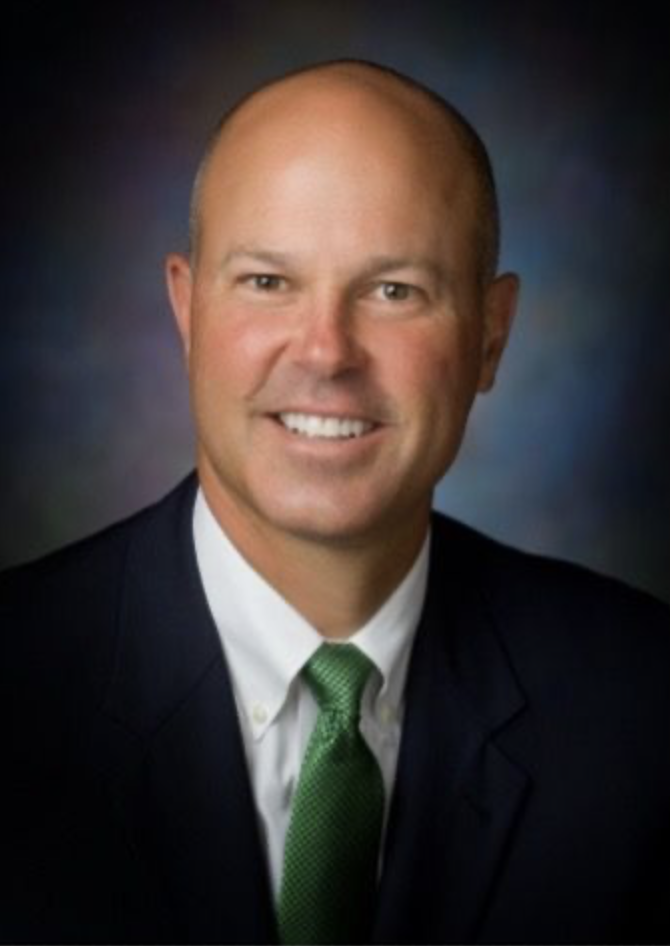
John B. Dicus became chief executive officer of Capitol Federal on January 1, 2003. Prior to his appointment as CEO, he served as chief operating officer, executive vice president of corporate services and various other positions since 1985. A graduate of Topeka West High School, Dicus continued his studies at the University of Kansas, earning a Bachelor of Science degree and a Master of Business Administration.
Dicus leads Capitol Federal’s True Blue team of almost 700 employees with strength, vision and moral standards that are hard to match in the business world. He shares these values with every organization he serves. Dicus serves as a trustee for the Capitol Federal Foundation, the University of Kansas Endowment Association and the Washburn University Endowment Association. He sits on the Kansas Bankers Association Board of Directors, the Kansas Board of Regents, the Washburn Board of Regents and the Greater Topeka Partnership. Dicus has also been a past member of the Federal Reserve Advisory Council, past board chair of the Greater Topeka Chamber of Commerce, past United Way Campaign chair and past general chair of Missouri Valley Swimming.
Martin: You’re a Topeka native who went to high school here, then attended the University of Kansas and walked out of college into a job at Capitol Federal. Clearly, you like it here.
Dicus: It’s been a great place to grow up. Got a couple degrees at KU, but came back immediately, started a family and planted roots at Capitol Federal. I’ve raised three daughters here who I can proudly say all went through 501 schools just like I did, got their college degrees and are successfully employed. So, Topeka is a special place for me.
Martin: Values are important for leaders — what would you say are your core values?
Dicus: Integrity, trust and having a word you hold to and people can count on. Those leadership traits get others to follow your direction. Being consistent and true to oneself is what helps our team at Capitol Federal, but also helps our community, customers and clients. If I can instill that across the organization and do what’s right for Capitol Federal, we’re going to be successful as a banking organization.
We started in 1893 and are still standing strong. We survived the late 1980s, which knocked a lot of savings and loan banks out of existence at the time. We were still a savings and loan bank in 2008 when the housing crisis happened. Fortunately, we survived that. Hopefully I’ve learned a lot from my dad and grandfather who survived all those events, and we’re able to navigate Capitol Federal through difficult times.
Martin: What is one piece of advice that’s stuck with you?
Dicus: One of Capitol Federal’s slogans is “The Most Trusted Name in Savings.” That was something my grandfather started back in the forties or fifties. If somebody can trust you, that’s a very good trait to have. It’s something that was important to my grandfather, important to my dad and now it’s important to me. Hopefully, it’s something I can pass on to others at the organization when I decide to retire.
Martin: If you ever decide to retire, as you seem to enjoy yourself there.
Dicus: I do. It’s a fun business. You’re helping people get the dream of home ownership. About seven years ago, we bought a commercial bank and have been growing that aspect of our business. It’s a new challenge and something I don’t know a lot about, which is hard as a leader, but a lot of us are learning and we’ve hired good people. That’s another good leadership trait: hire and surround yourself with people who are more talented than you are, then let them do their job.
Martin: You’re leading more than 700 employees. What qualities should a good leader have to lead a large organization?
Dicus: Consistency. Everybody likes to know things are going to be consistent. There’s always change. Everybody loves change until it affects them. Some people like to keep people a little off kilter. That’s not my style, but I think that’s where you as a leader have to figureout how you like to manage people. You’ve got 700 employees and they’re all different, but if you keep the majority happy, it contributes to the company culture.Martin:How has Capitol Federal cultivated a positive company culture?Dicus:Leading by example. I have a hard time asking somebody to do something I wouldn’t do myself. No matter your position, roll up your sleeves and be there with them. Let them do what they’re talented at doing, but if there’s any way I can help them, I’m there to do that.
Martin: Share a moment when you had to remind not only yourself, but your employees, that your organization could get through a very difficult time.
Dicus: A great example would be back in 2008 when the housing crisis came to fruition and a number of people were defaulting on loans. Financial institutions were giving loans to individuals who weren’t necessarily ready for home ownership or couldn’t afford it. At the time, they called them liar loans. The lending companies were always looking for the price appreciation to take care of the value, whether or not somebody could afford to make the payments. We were still a savings and loan bank. We held all the loans we originated in our own portfolio, but a lot of these financial institutions were selling them into the secondary market. So, they really had no skin in the game. As long as they sold that loan, it had no impact on them. But for us, we needed you to make those payments. Our underwriting was a little more difficult than at other Institutions, and our market share and earnings were going down. People started questioning the direction of Capitol Federal and saying we didn’t know what we were doing because look at what all our peers were doing. We even had some commentary from our regulators about that. When the bubble burst in 2008, all of a sudden people were like, “Oh, I guess they did know what they were doing.”
I was fortunate to be surrounded by people who shared my beliefs and were doing the right thing. There isn’t a whole lot of business for the right thing. There’s a lot of business for the wrong thing, but I’d surrounded myself and the organization with people who believed in the right direction.
Martin: What advice would you give to leaders or entrepreneurs who are still trying to figure it out?
Dicus: Have people on the outside you can talk to who’ve had similar experiences. Have people on the inside who you can trust will work with you through this together, so you’re not taking on the full burden yourself. That’s when it’s important to have good people around you. People you’ve built a rapport with and trust that in times of difficulty, you can reassure each other you’re doing the right thing as an organization.
Martin: What would you say is your everyday practice for growing as a leader?
Dicus: I’m always learning. I love to learn from other banks’ mistakes so I know how to navigate them before they can happen to us. I just read an article in The Wall Street Journal about how the leader of another organization almost stamped out people who didn’t agree with him. He was very forceful about how he supervised and managed people. I mean, that’s a leadership style. The company’s doing well, but again, I hope that’s unique. Maybe I’m more of a consensus builder.
Martin: There’s no way you’re working eight to five right now in any leadership position. Eight to five is not an option.
Dicus: That’s true. You’re 24/7 because whether it’s work or not, somebody’s watching you. Especially in the banking world where everybody’s a potential customer. There’s always a little pressure to watch what you’re doing. Being in a town where I grew up, there’s a lot of people I might not know, but they know me.
Martin: Do you have a daily regimen?
Dicus: I get up every morning and work out. I need to be up by 6:00 a.m. every day and doing something. I’ve got to get the day started. From that standpoint, I’m probably not as good at getting here on time as I should be, but hopefully after 40 years I’ve earned that. I do have a Mountain Dew every morning.
Martin: What does fun look like to you? Maybe going to a lake or beach house?
Dicus: It wouldn’t be a beach. It would be going to the mountains.
Martin: With your Mountain Dew?
Dicus: With my Mountain Dew. I got introduced to the mountains when I was a kid. I’m definitely not a beach guy. The lake is fine. My wife’s parents had a lake house up in Minnesota where we went for many years, but I grew up going on vacation in Colorado, so that’s probably my go-to thing when I can get away. But golf trips are probably the biggest plus for me.
Martin: With the amount of wisdom and years you have in leadership, what’s something you wish someone would’ve told you sooner?
Dicus: The importance of building connections with other people. It’s amazing how things come full circle. I heard the adage the other day about how it’s not what you know, but who. And how a student with a C average and an A network is going to go a lot further than a student with an A average and a C network. Start building that group of people around you who can make a difference. It’s a good trait to have and something everybody should work on early.