
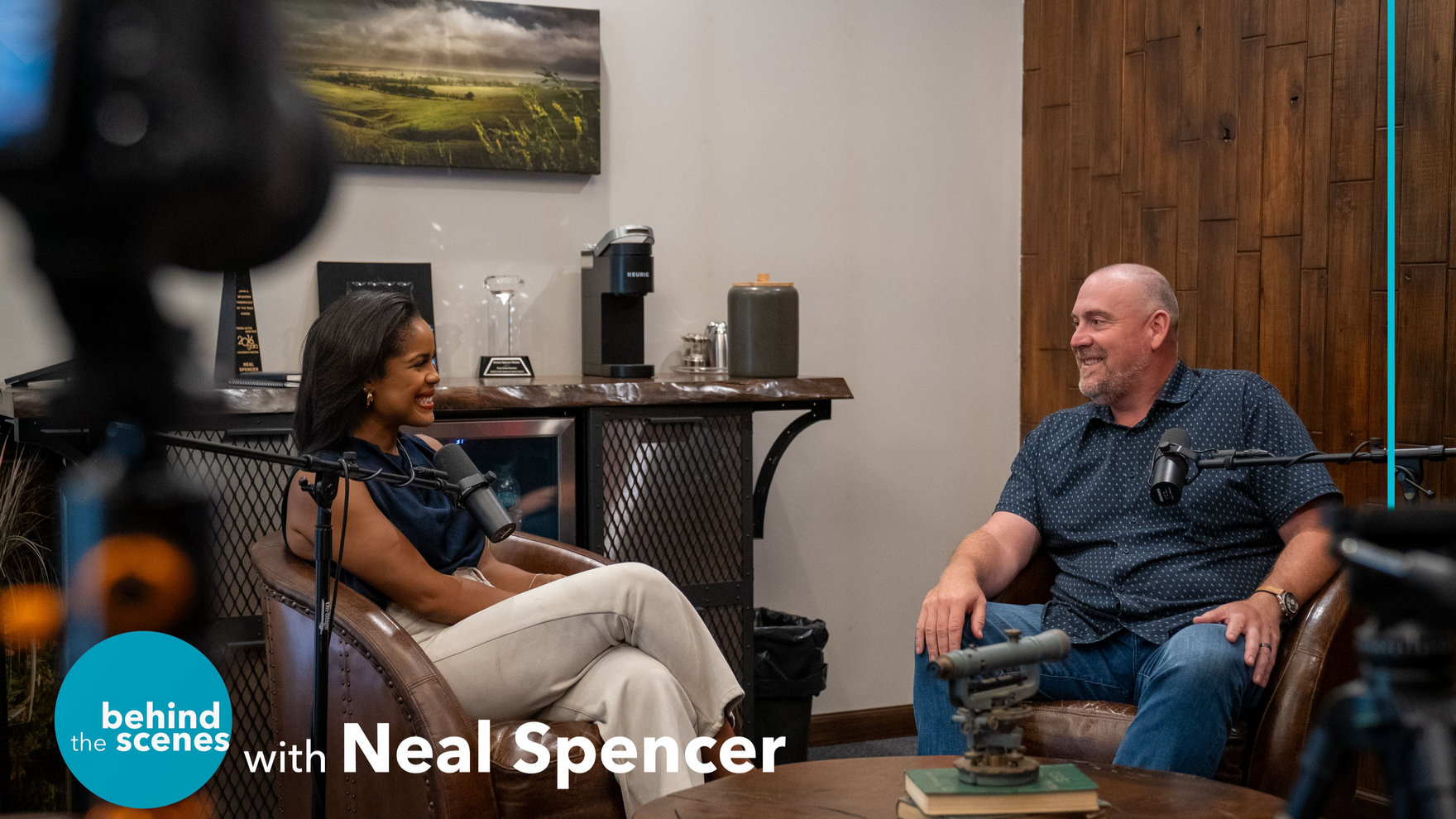
Behind The Scenes | Spotlighting Neal Spencer

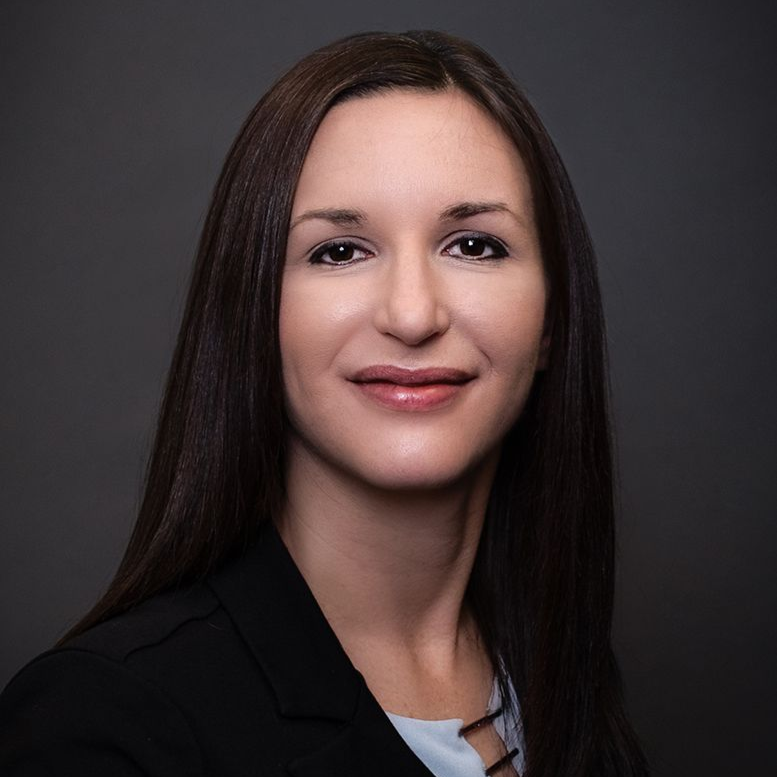
Behind the Scenes with TK Business Magazine is a podcast series hosted by Danielle J. Martin, delving into the innovation that fuels the growth of the Topeka community: local businesses.
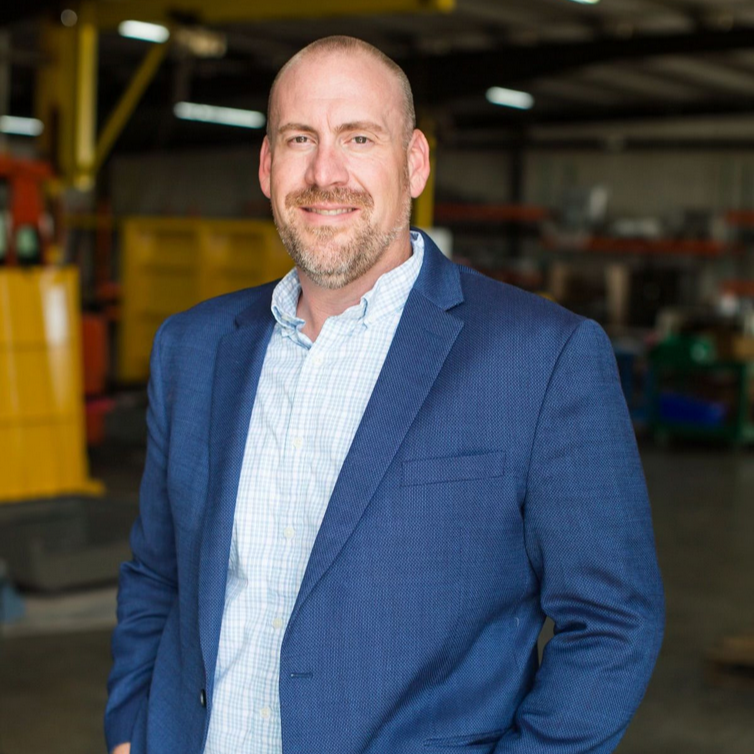
Neal Spencer is the president and owner of Ernest-Spencer, a 103-year-old Kansas-based steel manufacturing company. He was born and raised in Topeka, where he resides today with his wife of 22 years, Cora, and their four children, Elsie, Layla, Serenity and Emmet.
Neal began his career at Ernest-Spencer at the age of 14, working various jobs ranging from forklift operator to press operator. After graduating from Kansas State University with degrees in business management and economics in 2000, Neal held many roles in the company before becoming the fourth-generation owner and president in 2007. Since then, the company has quadrupled in size and now has two facilities totaling more than 500,000 square feet and more than 225 employees. They have also partnered with seven different Kansas-based businesses across the trucking, renewable energy and commercial real estate development sectors.
Neal is a genuine motivator and leader of people, providing forward-thinking business environments for others to succeed in. He leads Ernest-Spencer in its mission to be highly profitable by providing a progressive work environment for its employees, with safety, quality and productivity at its foundation.
Martin: You told me before that you’ve actually been in this business since you were 14.
Spencer: Yeah. Being a family business, I got in the car with my dad every Saturday morning and went to work with him. After I turned 14, he said “Hey, we’re going to go out in the shop and start doing a little bit of work.” I started learning very young and did that through college. It was part of the work ethic my dad wanted for me.
Martin: You took over the business when you were 30, after your father passed away. What was going through your head at that time?
Spencer: It was a challenge. Not only did my dad die — he was 56 and I was 30 — but he was very unhealthy prior to that. There were a lot of addiction issues in his life. If you can imagine anybody that’s been through that type of thing, there’s a lot of hardships, sadness and struggles within the family and then the worst of the worst happens. It’s kind of odd to say, but there was a sense of relief because you weren’t worried about someone you love so much anymore. But at the same time, I felt this wave of, “Oh my gosh, now what?” For me, that was Ernest-Spencer. It was this business that’s been in the family for decades and now it’s on my shoulders at the age of 30.
The very next day after my dad died, I went to work. One day there were people at Ernest-Spencer who I reported to, and the very next day they were reporting to me. It scared me to death. But what was truly amazing is how the people at this company, my dad’s leaders, stood behind me and became my mentors.
Martin: Talk to me about some of the things you learned from that experience, or something you wish you would’ve known back then.
Spencer: Before my dad passed away, he told me, “Don’t ever become complacent in sales in a company like ours. You’ve got to constantly be searching for the next thing because something, somewhere, is going to happen in your customer base that you didn’t anticipate.” I really learned that lesson. I also learned to work harder, longer and stronger than the rest.
Martin: What are some of the things your dad implemented that you’re ensuring will continue to live on?
Spencer: Servant leadership, or the idea of going to work every day and trying to understand how you can help somebody else be their very best. That’s something my dad, granddad and great-grandfather did well. We’ve been in business for 103 years by empowering others and surrounding ourselves with strong people. We’re here to take care of our customers, our employees and their families, and to provide value to our community. Every day we make decisions based on what is best for those three key areas.
Martin: You went to Topeka High School and K-State. Did you see yourself living out your life in Kansas?
Spencer: Yeah, I did. I wanted to work for my dad, but my dad never forced it on me. He never said, “I need you to be the next generation.” It was always, “Are you sure you want to do it?” I tell my own kids that it looks glamorous, but it’s a lot of work. But he told me if it’s not what I want to do, to go do what makes me happy. For me, I just saw tremendous opportunity. The values of Kansans and Topekans are second to none. I travel to a lot of places and every time I come home, I think about what a great place this is to be.
Martin: You lead a team of more than 100 people. Could you share some insights into how you’ve developed as a leader?
Spencer: Well, faith is number one. You start with that and your belief in God. But when my dad died, I lost my mentor. So I reached out to my wife’s uncle who was a successful business guy and said, “Hey, Uncle Dave, I think I need a little help. There’s times when I don’t know whether to go left or right or up or down.” He started spending time with me and talking me through business concepts.
Having somebody else who’s been in that situation is tremendous. And now I’m at the age where I’ve been doing it long enough that I can be that person for somebody else.
Martin: What advice would you give to small business owners struggling to grow?
Spencer: First off, you’ve got to have people with a wide set of abilities, not a narrow focus, because you’re going to ask them to do lots of things. That includes yourself. If you’ve chosen to go into business, you yourself should be scalable.
I also don’t discount the importance of documentation and procedure and policy, even in a small company, because as you grow and get busier, those things will be harder to put in place. If you have them set in place before you start to really grow and see success, then you have scalability.
The same goes for marketing. Don’t underestimate the value of strong marketing for a small business. One of the first things I did with Ernest-Spencer was figure out how to brand it differently than everybody else.
Martin: If you could start over and create a business today, what steps would you take?
Spencer: Find the right people. That’s the easy answer. I don’t know enough about AI to tell you how it could influence that, but I think that’s a big thing right now. Find the right people, dig into AI, set the branding from day one and then go get it.
Martin: What other leadership advice would you give to someone starting a business today?
Spencer: People oftentimes get so married to their career that they don’t have time for their kids or spouse. If you don’t have those things strong, you’re not going to have a strong business. You’re not going to have a career that’s fulfilling because there’s something that’s going to be missing when you go home at nine o’clock at night.
Martin: You’ve also mentioned the importance of your faith.
Spencer: It’s the cornerstone of who I am. I talk about these things like servant leadership and how I can help others make their day better, and those are Christ-based philosophies. Right after my dad died, I also started a faith journey. That journey is different for everybody, but it definitely helped me center myself.
Martin: I know Ernest-Spencer is active in the community. What are some of your current partnerships?
Spencer: We donate, support different charities and participate in golf tournaments and food drives, but we also serve on leadership boards like Washburn Tech’s. I spend my time with the Stormont Vail Foundation and the 20/30 Club, and this year I’m the chairman of GO Topeka.
Martin: I love the program you guys are doing with Washburn Tech.
Spencer: It’s a big deal. They’ve got a great focus on what the employers of our community need. We participate on those boards, as do others in town, to help influence what skill sets graduates need to have when they come out of school. Washburn Tech and Washburn University understand that just because you can weld doesn’t mean you’re going to be a good employer or employee. If you can come out of that program and understand the importance of finances, being at work on time and meeting deadlines, you’re going to have a better career.
Martin: What’s next for Ernest-Spencer?
Spencer: Our big focus is assembly. Traditionally, we’d cut and bend metal parts and ship them to somebody. Now we’re getting into full turn-key assembly, like finished products that are contract manufactured for other original equipment manufacturers. There’s more margin when you do that and you niche yourself from your competition. Most competitors are not going to even try to do that kind of stuff.
Martin: Do you believe the myth that robots are going to come into manufacturing and take over everyone’s jobs?
Spencer: That’s a funny question. Robots play a part in manufacturing in particular. We deploy robots and we’ll continue to do more. Honestly, there aren’t enough skilled people in the workforce, but the robot’s not going to take over the HVAC guy that comes to your house or the plumber that’s going to replace your toilet, or the person that’s going to quality inspect. So will there be more and more automation? Certainly, but it’s only going to enhance what people do. That’s my belief.
Martin: I noticed that you play pinball, and you’ve mentioned the pinball machines you have at home are movie themed.
Spencer: I think pinball machines are beautiful. Every pinball machine is a unique work of art. They’re designed by comic book makers or people that help develop movie themes, and the machines play sounds or even voices from the movies. They’re fun, immersive and a great way to let loose and not think about work.
Martin: Do you golf?
Spencer: I love golf, and I love hanging with my family. We’ve got a great home with lots of things to do there, just relaxing. I also love researching and collecting bourbon.
Martin: Before we wrap up, do you have any final words for aspiring small business owners and leaders?
Spencer: Find ways to separate yourself from your competition. That could be your branding, your messaging or how you treat people. Have that person or two, whether it’s your wife or your husband or another business associate, that you can talk to because it can be lonely at the top. If you’re running a business and you’re trying to do it all by yourself, find some people. Because there are going to be rainy days.
As I say around here at Ernest-Spencer, if I could just make more good decisions than bad, we’ll be okay. Because the bad ones are going to happen. We’re human