
HME Inc. | More Than Metal
By CORINN GUEMMER | Photos by BRIAN PETERS

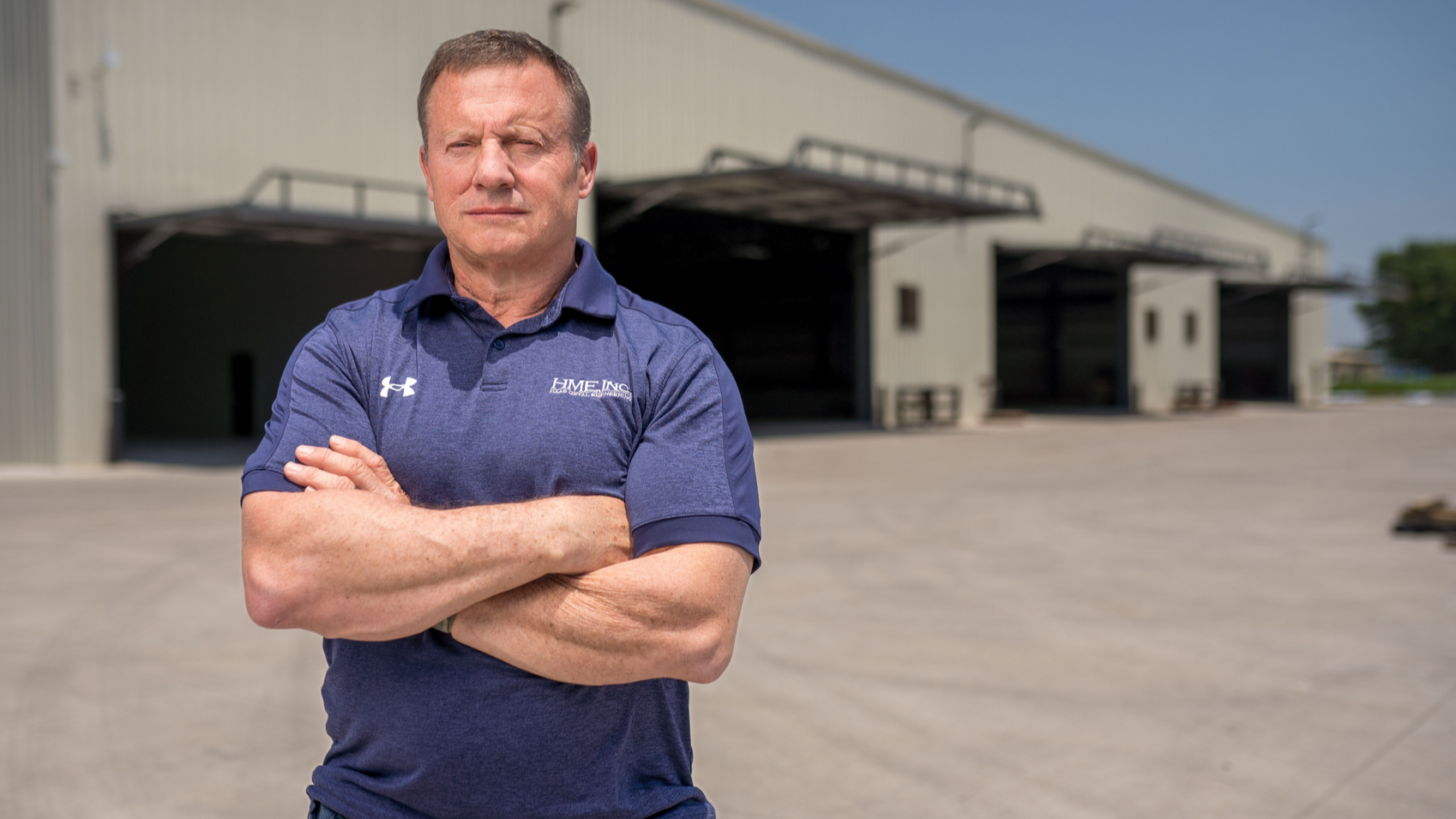
Ten years can change everything — or reveal what was always there. When TK Business Magazine first profiled Haas Metal Engineering, better known as HME Inc., in 2015, company founder and President Jon Haas was running what looked like a straightforward steel fabrication shop in Topeka.
Since then, the company has scaled its business in every direction, from dirt bikes and powersports vehicles to affordable housing and employee-owned investments. How Jon pulled off that growth, and what other business leaders can learn from his approach, is a lesson in how to build teams that can handle whatever comes next.
BEYOND THE GARAGE
“In the beginning, it was just me,” said Jon, who initially got into metalwork because he wanted to build weightlifting equipment.
He figured he could compete with the commercial gym gear on the market, but the math didn’t work out because imports were simply cheaper. The upside was that the experience made him more comfortable around steel and welding torches.
A few years later while earning his master’s in engineering management, Jon noticed a need in the construction industry: “miscellaneous metals,” or the custom brackets, railings and structural pieces that don’t come in standard catalogs.
It turned out contractors were scrambling to find them. So when a graduate school assignment asked him to write a business plan, he saw his chance.

“Before the class was even over, my assignment partner and I were looking into it. We started bidding jobs and built them in my garage,” Jon said.
By 1996, HME had been officially incorporated and Jon left his day job behind.
Whether that was confidence or calculated risk-taking depends on perspective, but it worked. HME Group now spans steel fabrication, construction, motorsports, equipment rentals and housing developments.
“I always try to bid more work than we can do, and we just grow into it,” he said.
Ask Jon what drove the company’s growth, and he’ll tell you their guiding principle never changed: treat people right.
“Standing behind our product, treating people the way we want to be treated, taking care of our employees,” Jon said. “That is all so important to me.”
Another big part of his approach, he says, is learning when to let go.
“You have to trust people to free yourself up,” Jon said.
The business has acquired several companies in recent years. In 2012, Jon bought CycleZone, a Topeka dirt bike dealership. It has since tripled its staff and, as of earlier this year, absorbed another dealership — Topeka Power Sports.
Two years later while HME was working on a Kentucky hospital project, one of the subcontractors filed bankruptcy mid job. Jon bought the subcontractor’s company rather than watch the project stall, leading to the launch of what is now HME’s steel erection division.
RETURN ON INVESTMENT
HME’s most ambitious acquisition came in 2017 when they bought a historic machine shop and commercial door company operating since 1876. Its staff has more than doubled under the company’s leadership, from 60 employees to 130.
Buying a door business turned out to be a natural fit for their construction work, while the machine shop proved its worth when the company landed a contract building machinery for the government of Puerto Rico.
Of course, with more projects comes more equipment. That’s why in 2019, HME launched a crane and equipment rental service. Jon also started Six Zero LLC, an employee-owned investment company, around the same time.
“With Six Zero, there was a need for employees to have something they could be hands on with,” he said.
Six Zero lets team members pool money to invest in rental properties and equipment, generating returns for employees while helping HME scale faster. The company’s name is meant to reflect Jon’s goal of helping employees retire by 60.
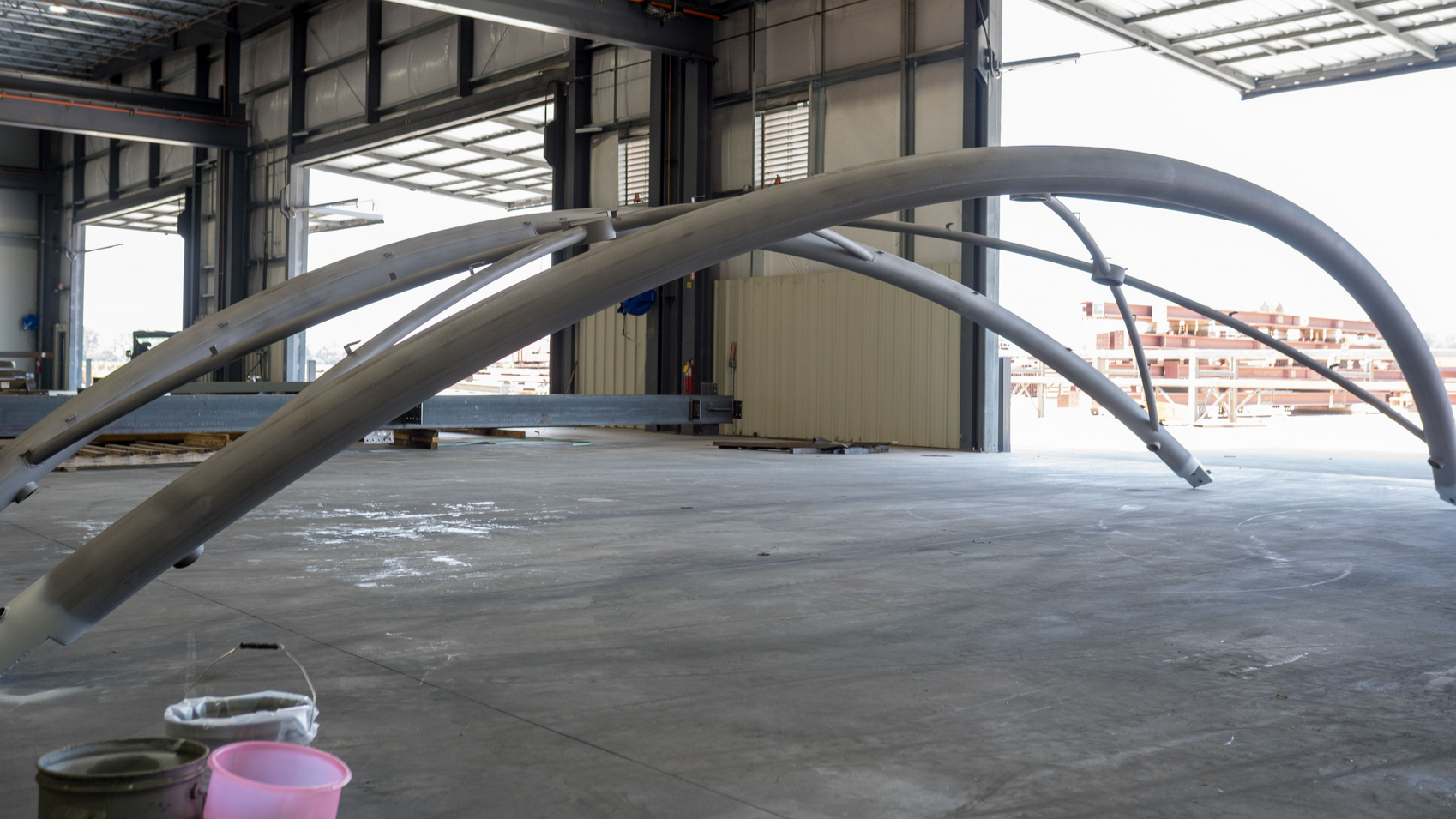
HME also hopes to tackle another pressing issue: housing. They’re currently developing a hybrid building that combines steel frames with wood components, designed as an affordable housing solution for rural communities.
It’s a concept that builds on a structure called the Agline, of which HME has already sold more than 20 units. Their latest version of it targets the growing market for “barndominiums” — barn-like buildings that have been either partially or fully converted into residential spaces, often with ample room for a workshop or storage.
Another key HME development? Their new 120,000-square-foot paint facility, which separates welding and coating operations for insurance and safety reasons. Construction began a year ago and is nearly complete, Jon said.
Industrial coating capabilities mean HME can now handle massive structural components for national logistics and distribution companies, the kind of multi-state projects that require both scale and consistency.
Jon credits the facility with improving production speed, but he’s quick to point out another factor he believes makes HME competitive: Kansas incentives. Thanks to grants such as those offered by the Joint Economic Development Organization (JEDO), expanding businesses that stay in Kansas can receive property tax abatements and income tax credits for every job they create.
“You don’t get a handout to go pay for stuff. You get credits on the money you make,” said Jon, who sees the grants as buffers against rising steel prices and labor costs. “It benefits our clients and us. It’s a win-win.”
EFFICIENCY, NOT REPLACEMENT
HME has made some major investments in automation and robotics, but Jon is clear about their purpose: improving efficiency, not eliminating jobs.
“We’re not purchasing robots to replace human labor,” he said. “We’re purchasing them to make us more efficient and competitive.”
Automation technology handles repetitive tasks for machinery — welding the same joint hundreds of times, cutting identical pieces — so employees can take on work requiring more judgment, skill and problem-solving.
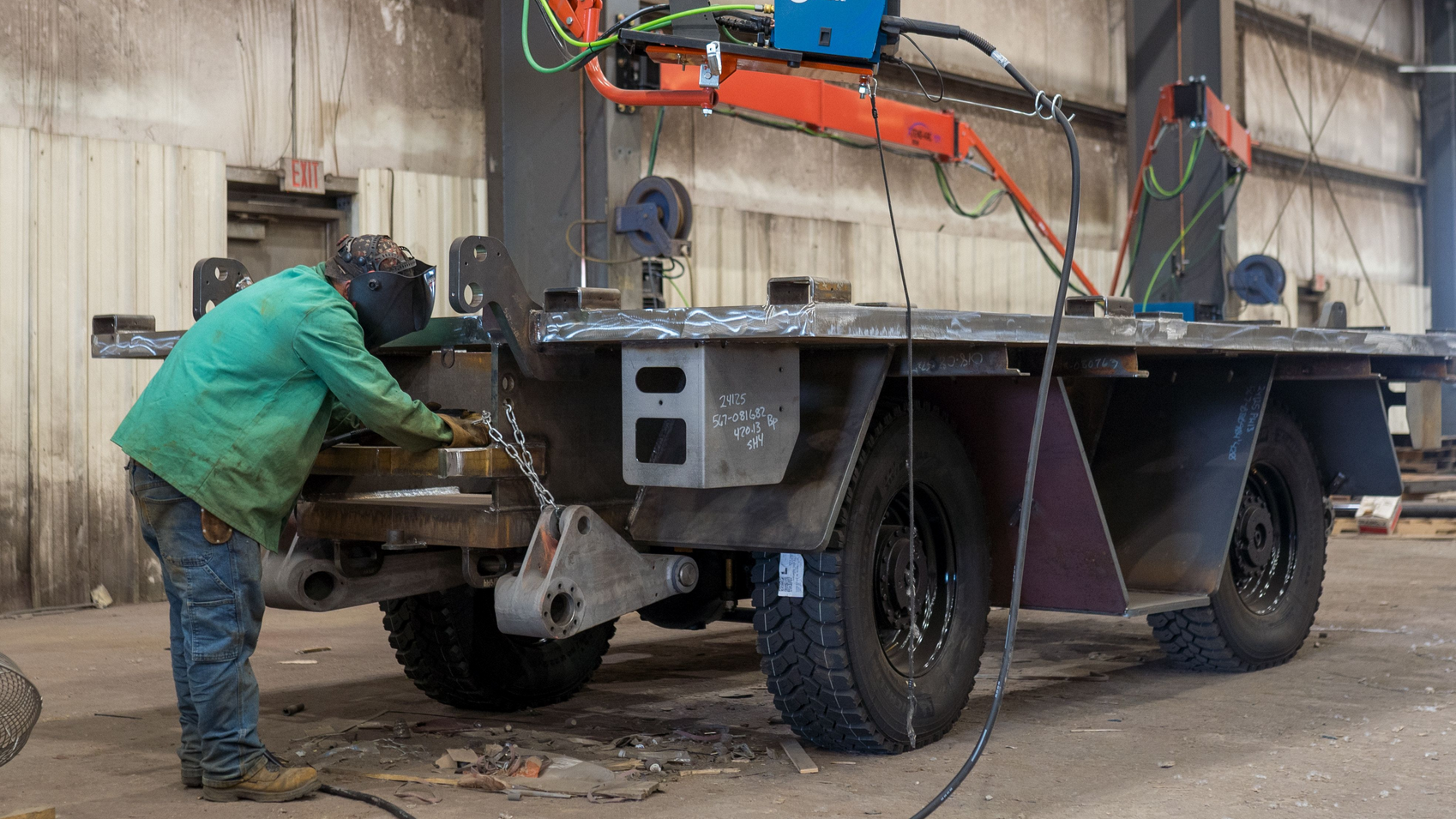
HME says automation has helped them scale responsibly while continuing to hire. Jon reports that even during the 2008 economic recession, the company did not lay off a single employee, even when materials were costly and profit margins were tight.
“Tenacity is huge for us. COVID, steel price increases, tariffs — they’ve hit us, but they’ve made us stronger,” he said. “Even when we were technically losing money, we kept pushing and were able to stay profitable.”
For Jon, it all comes down to teamwork.
“Having a team who all works together to make sure you survive during hard times is huge. I really try to take care of my employees and they try to take care of HME. If I can hire someone smarter than me, I absolutely will,” he added. “Building a team of people who can do things better than I can is a key to success.”