
Holding The Keys | A-1 Lock & Key
By JENNIFER LECLAIR | Photos by BRIAN PETERS

Long before smart homes and biometric scanners, there was Elliot’s Mower & Locks, a Topeka-based business founded in the 1930s and better known today as A-1 Lock & Key.
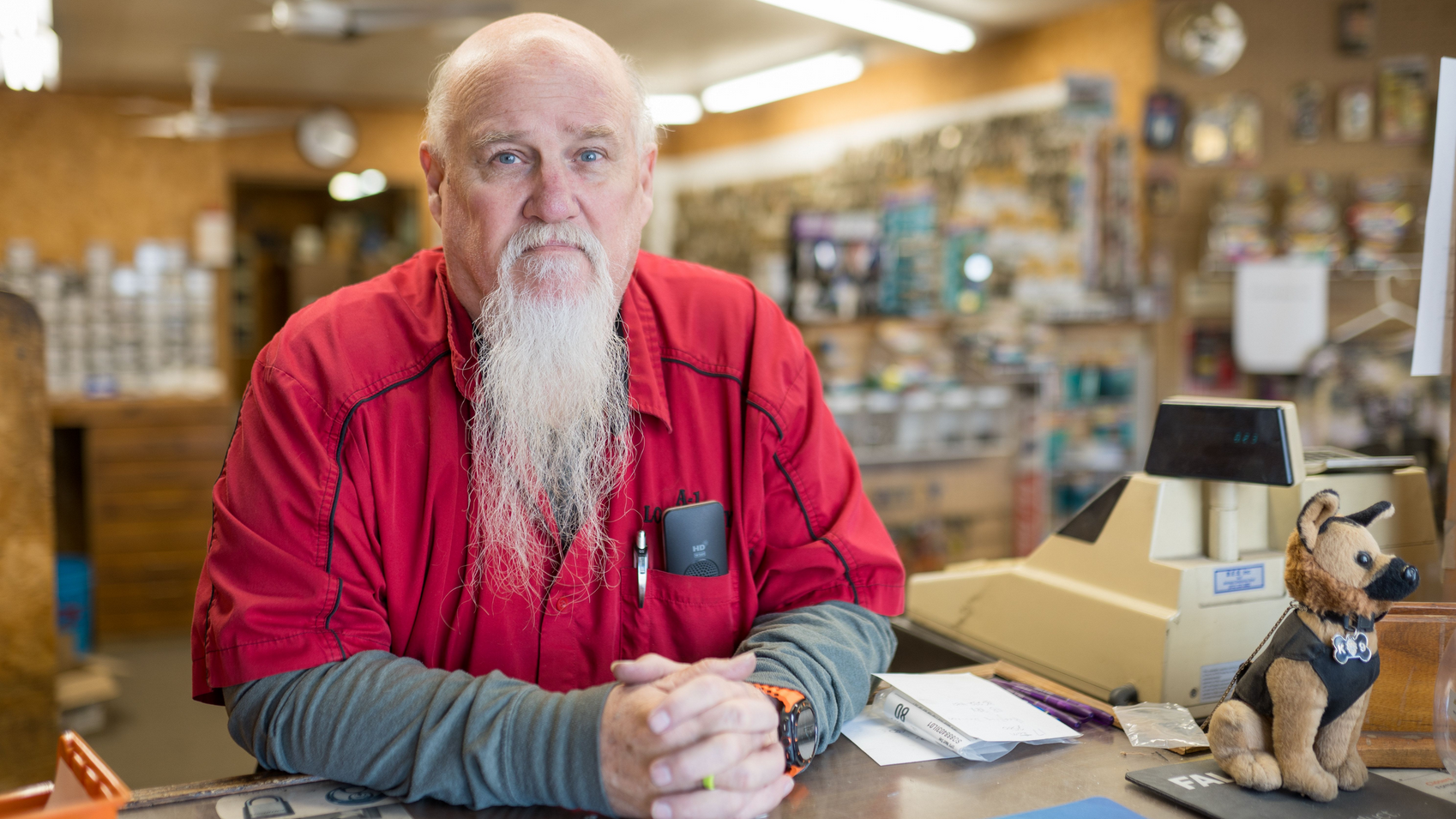
Today, A-1 Lock & Key is the city’s only brick-and-mortar locksmith shop. While many trades have been automated or replaced over the last century, the demand for locksmithing services remains steady. Owner Dana Hall and his son, Zach, have kept the business running with nearly 90 years of service to local homes and businesses.
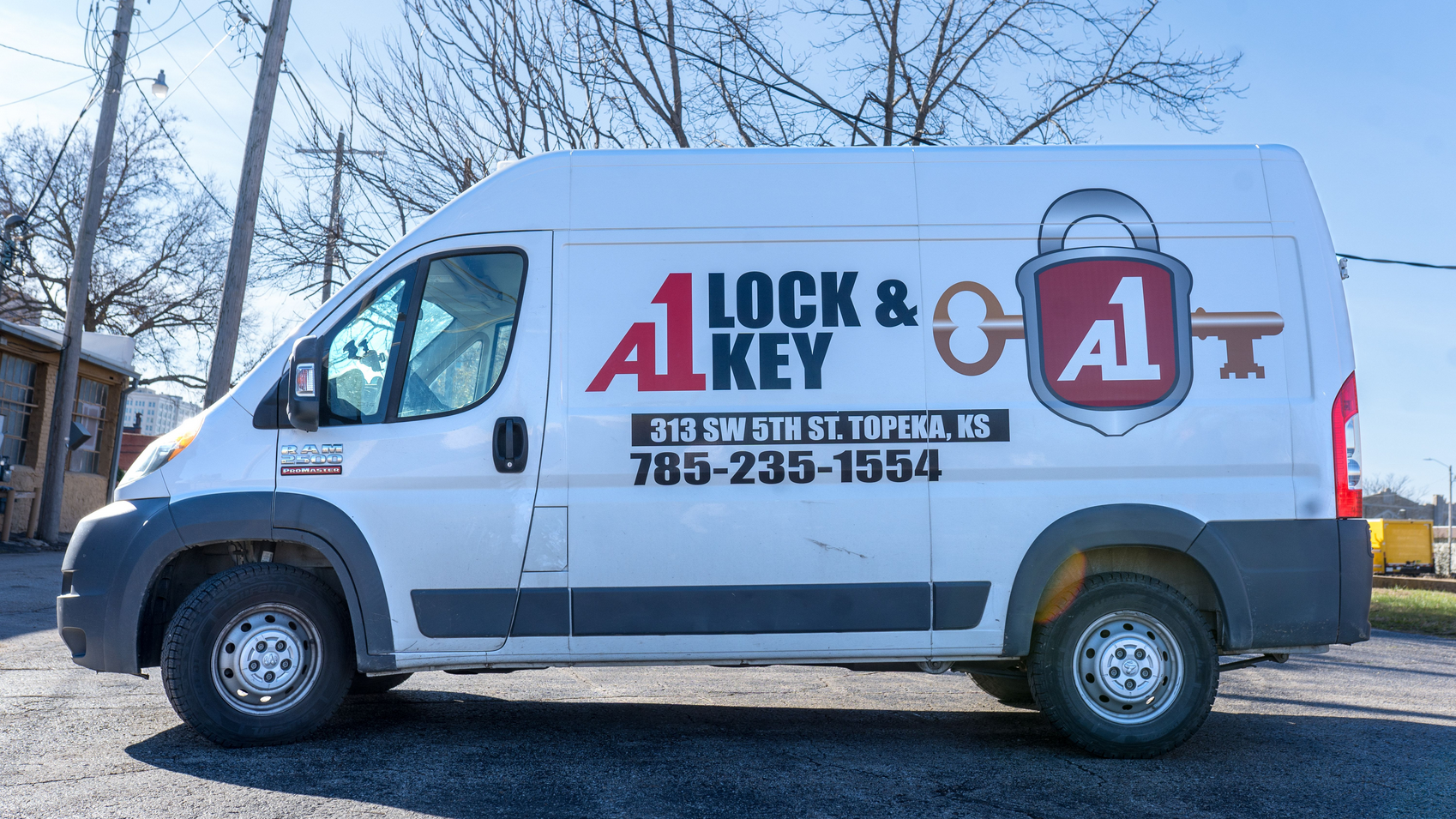
When Elliot’s Mower & Locks was sold in the 1970s, the new owners rebranded it A-1 Lock & Key and moved it to its current location at 313 S.W. 5th St. in 1977. By the time Dana began working there in the late 1980s, A-1 was already a well-established business.
“I worked here about 10 years before I bought it,” Dana said. “Honestly, buying it was mostly about keeping a job. But I enjoyed the work. Still do.”
Dana became the owner in 1999, and since then he has seen the industry change dramatically.
“Even with all the electronics in today’s cars, homes and businesses, almost every lock still has a key,” he said. “That part doesn’t change.”
PICKING THE RIGHT LOCK
When you can buy a keypad deadbolt at a warehouse store or order a replacement fob online, it might seem like locksmiths would be fading into history. But across the country, locksmiths remain busy.
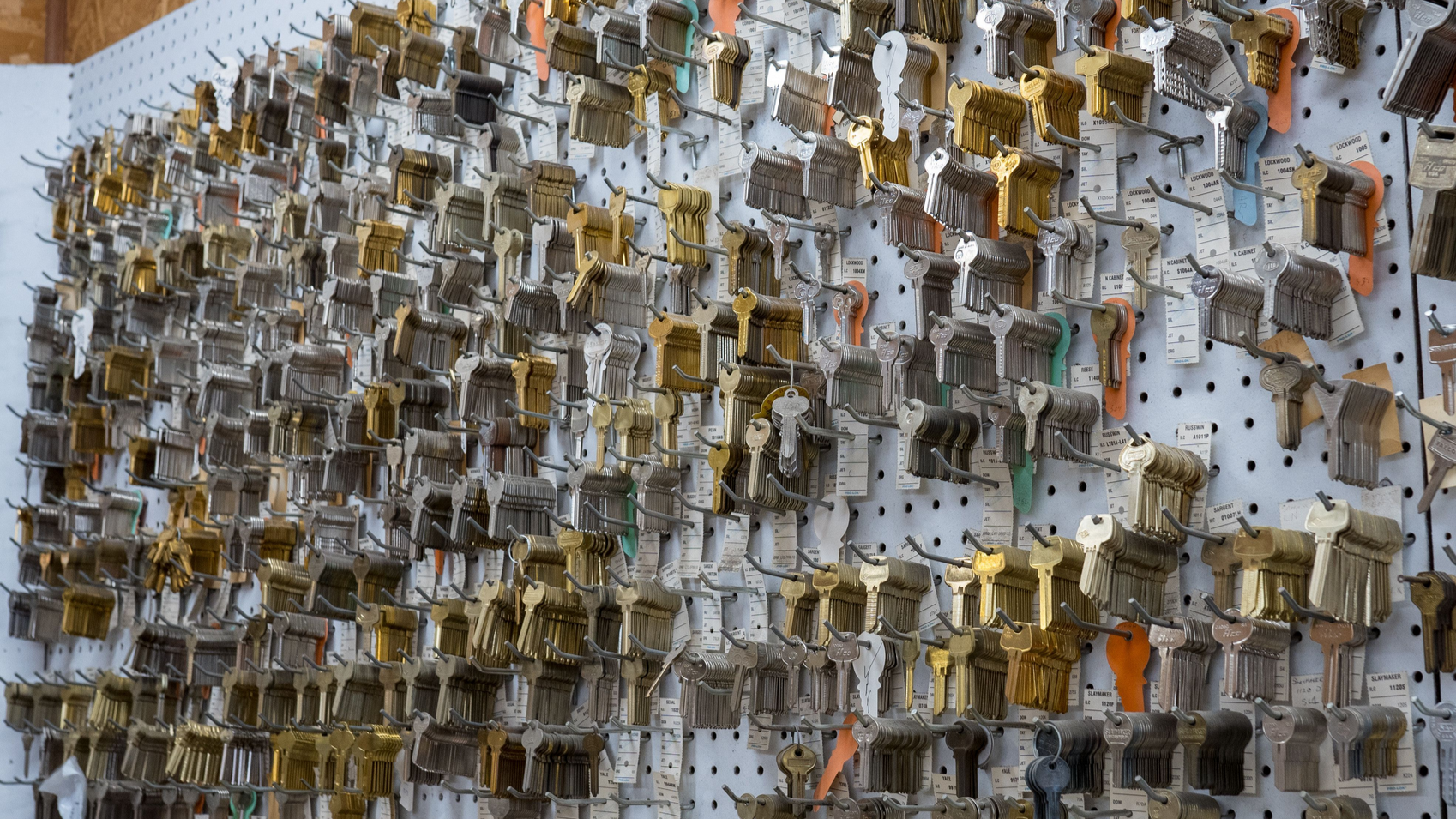
Where chains rely on automated machines that often misread or can’t identify older keys, A-1 relies on something machines don’t have: skill, knowledge and human eyes.
“We get a lot of [big-box] customers sent here,” Dana said. “People come in frustrated because the machine didn’t read their key. But I just look at it and say, ‘It’s this one’ because we don’t rely on a machine, we use our eyes and hands.”Local support, he adds, is critical. “It keeps us going and keeps our doors open,” Dana said, adding that he knows local support is a two-way street, so they support the community right back. “We give to local charities, and sometimes if it’s a small nonprofit needing a job done, we’ll just donate the work.”
TURN-KEY SERVICE
Locksmithing is ancient, thousands of years old, as Dana likes to point out, and yet the trade remains as vital today as it was in Topeka’s early days.
“We’re needed now just as we were 100 years ago or 3,000 years ago,” he said. “If something has a lock, sooner or later, somebody’s gonna need help with it.”
Despite modern advances, many core services are unchanged from decades past.
Many core services are unchanged: cutting keys, rekeying locks, unlocking houses and cars. What’s different is the electronics, especially in cars and smart-home systems. Hall’s son handles the more tech-heavy projects.
“He’s young. I’m old,” Dana said. “That’s the new guard and the old guard working together.”
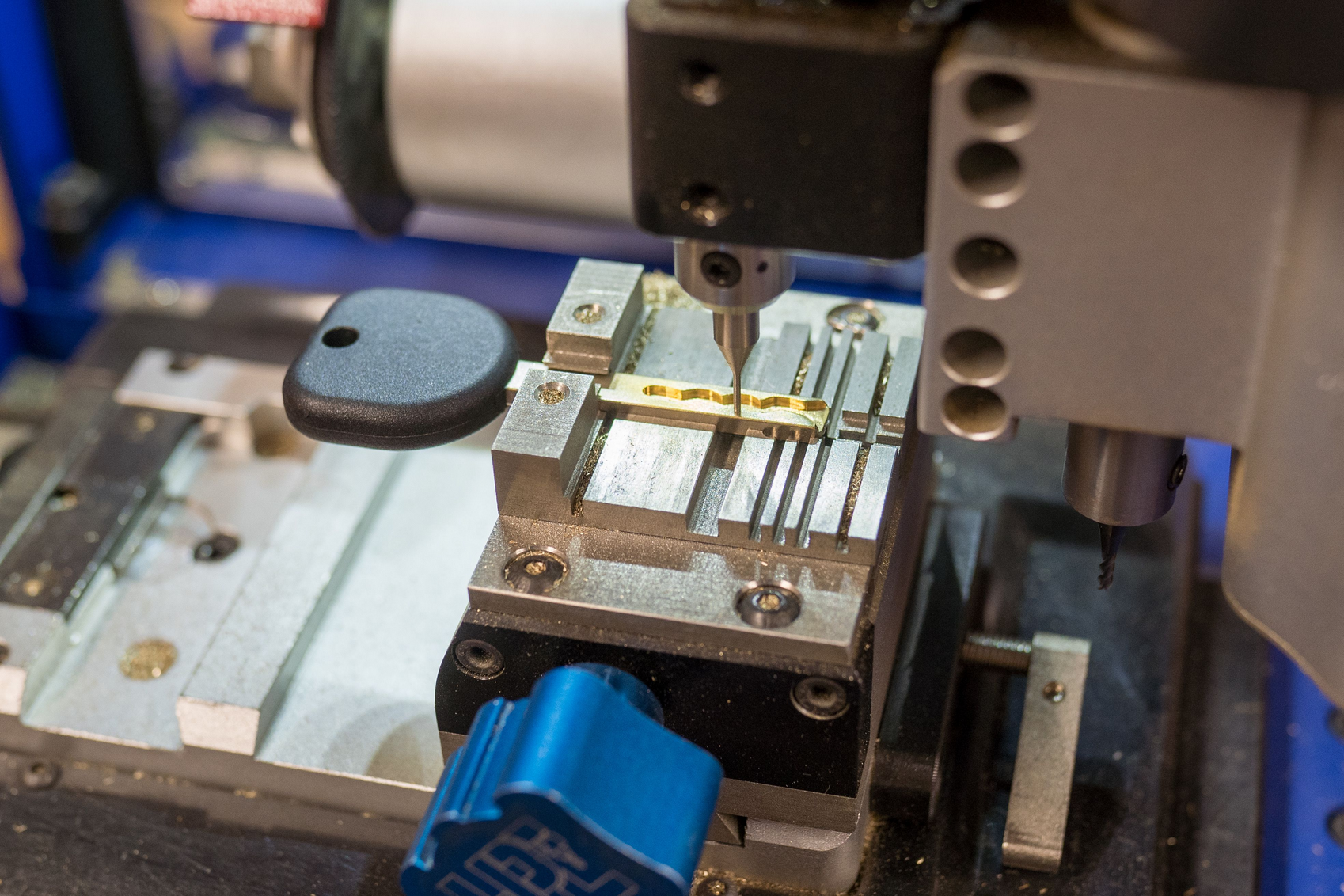
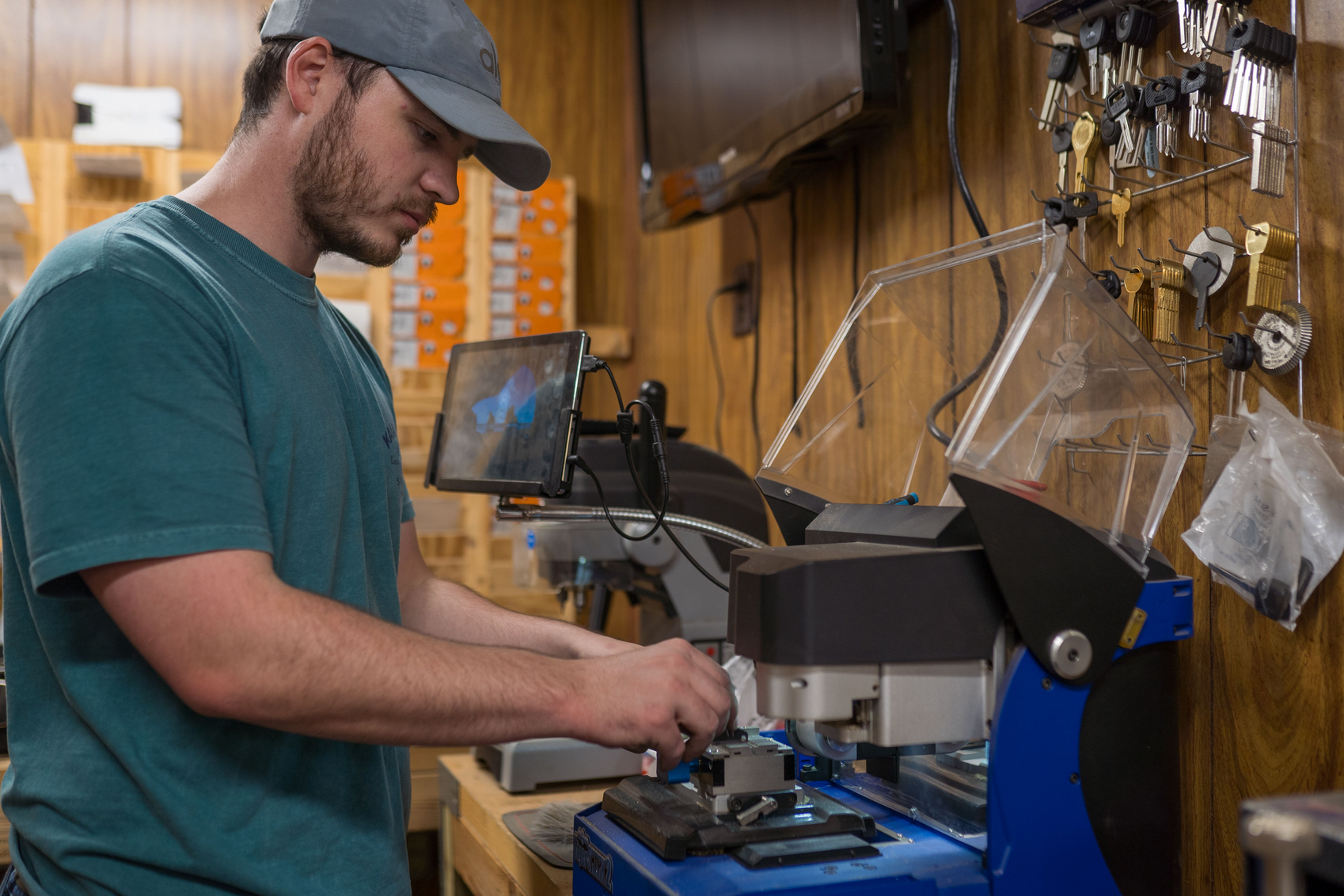
The shop handles both modern car fobs and 19th-century house keys, with high-security Swedish key blanks sharing space with antique padlocks from estate sales. The variety keeps the work fascinating, Dana says.
“I’ve had stuff in here from the 1700s and 1800s,” he said. “The oldest one was from the 1600s. I had to send that one off. I also had a guy bring in 1800s manacles, in search of a key for them.”
How exactly does one make a key for 200-year-old handcuffs?
“It’s like a puzzle,” Dana said. “You form-fit steel to the lock. It’s not blacksmithing, but you’re working with metal, figuring out exactly what the lock needs. That kind of work I’d do more of it if I could.”
Of course, most days aren’t filled with antique locks. The bread-and-butter of the business is everyday problems like unlocking cars, making copies and helping businesses rekey after personnel changes.
And then there are the calls that carry real urgency: lockouts involving domestic violence situations, sudden breakups, terminated employees, frightened or vulnerable people needing immediate safety.
“We see our share of those,” Dana said. “That’s part of the job. You know you’re doing something important.”
LOCK, STOCK AND 90 YEARS
For all its importance, locksmithing isn’t a booming industry.
“There are only about 3,000 locksmith shops in the entire country,” Dana said. “Maybe 10,000 to 15,000 locksmiths total. That’s not a lot.”
Finding trained help is tough, and training them is even tougher. On top of that, product costs and tariffs keep rising, squeezing small businesses that rely on specialty materials.
“One of my suppliers told me his shipping costs doubled during the pandemic,” Dana said. “And prices don’t often go back down.”
A-1 Lock & Key has survived ownership changes, recessions, technological changes and supply chain problems. Dana says being local, and staying personal, helps.
When asked whether locksmithing will still be necessary 100 years from now, Dana doesn’t hesitate.
“Of course,” he said. “Even the fanciest electronic locks have keys. And somebody has to work on them when they break.”
Electronics will continue changing, he predicts, and automation will grow. But craftsmanship, what he describes as the human ability to understand, troubleshoot and solve a physical problem, will always matter.
“We’re here,” Dana said. “We’ll answer your questions, try to figure out the problem, and do whatever we can to fix it.”