
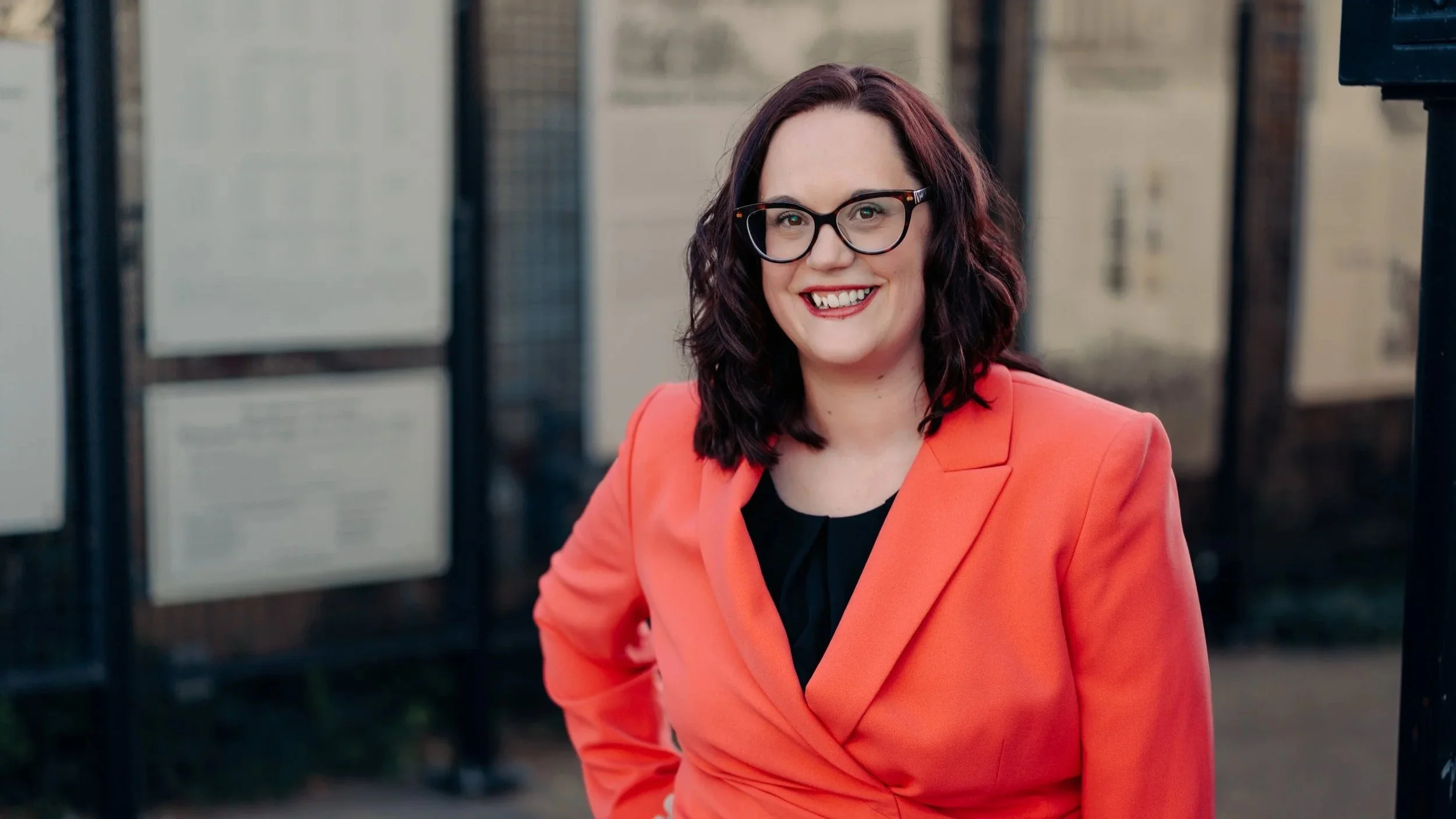
Cheri Faunce | 20 Under 40
Cheri Faunce
Chief Executive Officer
YWCA Northeast Kansas
Cheri Faunce serves as CEO of YWCA Northeast Kansas, an organization dedicated to eliminating racism and empowering women. Her background is rooted in nonprofit leadership and organizational development, with a focus on strengthening organizations and building community partnerships. She came to Topeka in 2004 to attend Washburn University, where she was a Bonner Leader and earned a bachelor’s degree in psychology. She later earned a master’s degree in organizational leadership from Baker University.
Outside of work, Cheri’s most important role is with her family: she and her husband are raising their teenage daughter, Adria, together known as the “Faunce Trio.” Her family keeps her grounded in how she shows up for people, at work and in the community.
What’s something people might be surprised to learn about you? Tell us a little more about it.
There is not a secret, more sophisticated version of me that I bring to the CEO job. I am pretty much the same person inside the workplace as I am outside of it...sometimes to the amusement of people who know me in both settings.
I am a fairly “windy” person. I do not have a great poker face. I have a tendency to go rogue, although I have learned that “taking smart, calculated risks” sounds much better in professional settings. I also think I am considerably funnier than I probably am. To make matters worse, when a joke does not land (or sometimes even when it does), I have an unfortunate tendency to explain why it was funny, which, as you might imagine, has never made a joke funnier.
Humor is probably a big part of why there has never been much separation between the two versions of me. It is how I connect with people, how I get through uncomfortable moments, and sometimes how I carry things that are genuinely heavy. My team has jokingly referred to CEO as “Cheerleader Executive Officer,” and there is probably some truth to that. I believe part of my job is to bring energy, celebrate people, and remind them why the work matters – especially when the work is hard.
That does not mean I cannot turn up the no-nonsense side when a situation calls for it. “The Dragon Lady” has made an appearance a time or two over the years (and, yes, there is a story behind the name). Being a fun leader and being a serious leader have never felt mutually exclusive to me. I take my responsibilities very seriously. I just have never felt the need to become a different person in order to carry them.
What should someone never take for granted? Why?
The wins that look or seem small:
Our family does not hide our mental health journey. Depression, anxiety, self-harm, and suicidal ideation are hard enough without adding shame to the list. We have chosen to talk openly about our experiences because they are part of our family’s story, and because every honest conversation chips away at the stigma that keeps so many people silent.
There have been seasons when things I might have considered “basic expectations” became reasons to celebrate. Getting out of bed. Going to school. Laughing at something ridiculous. Even choosing to wear a T-shirt instead of hiding inside a hoodie on a 90-degree summer day can represent tremendous progress.
Somewhere along the way, I stopped thinking of “baby steps” as small. What looks small to someone on the outside may have required an enormous amount of effort from the person taking that step. I would never romanticize what taught our family that lesson. Some things do not need a silver lining, and there are experiences I would erase in a heartbeat if given the chance. But I will not overlook the wins that look or seem small anymore. I know too well what it can take to reach them.
What led you to your career?
I actually had a very different plan for my career. I earned my undergraduate degree in psychology and intended to become a marriage and family therapist. I moved to Manhattan to attend K-State and was headed down that path when a period of significant personal trauma caused me to reconsider what came next. I did not know then that I was actually taking the first step toward a career I never could have mapped out for myself.
My first "real job after college" was with a nonprofit where I had previously volunteered as a Bonner Leader. By the time I was 23, I was serving in a director role. I certainly did not have all the experience that would traditionally come with that title, but someone believed in my potential and was willing to take a chance on me.
After changing course, I intentionally waited before going back to graduate school because, quite frankly, I did not know what I wanted to be when I grew up. So, I worked. I took on more responsibility, made mistakes, managed people, and navigated difficult situations. By the time I pursued my master’s in organizational leadership, I had years of professional experience to bring into the classroom. I was not learning concepts in the abstract; I had real people, decisions, successes, and failures to connect them to.
The people I have worked alongside have shaped my path just as much as the work itself. I have never been particularly good at “networking” in the traditional sense. Put me in a room and tell me my job is to mingle, and I suddenly forget how normal human interaction works. Most of my professional relationships have developed much more organically, through shared challenges and common goals. Because people saw how I handled difficult situations and what I was capable of doing, they remembered me, said my name in rooms I was not in, and encouraged me toward things I might not have considered on my own.
That has shaped how I evaluate other people. I place far more emphasis on the experiences someone brings than on the credentials listed after their name. I tend to look for potential, not just proof that someone has already done the exact job before. Someone did that for me when I was 23, and it changed the trajectory of my career.
What’s one thing you’ve learned about yourself through your career? How did you learn it?
I have learned that I thrive in the “messy middle.” More specifically, my time at YWCA has taught me that I genuinely enjoy adaptive challenges – the problems that do not come with a clear answer, a step-by-step process, or even a shared understanding of the problem itself.
This may be particularly surprising to people who knew me earlier in my career. I was the person who was always on time for meetings. My phone was put away. I had a personal rule that every email received a response within 24 hours, and that response was always sent or scheduled during “regular business hours”. I liked plans, structure, clear expectations, and knowing what came next. I also measured my effectiveness, at least in part, by how quickly I could get from problem to solution. In hindsight, I was probably a little bit of a square...
YWCA has challenged nearly every part of that. I still value structure, responsiveness, and accountability, while recognizing that some of the most important work does not happen according to plan. When you lead an organization responding to human needs, a crisis does not care that you have an 8:30AM meeting. Opportunities do not always arrive conveniently. Funding changes. Community needs shift. People need different things at different times. We have restructured programs, expanded into new areas of work, navigated workforce and funding challenges, and made significant organizational changes, all while continuing to provide critical services every single day. There is not necessarily a playbook for navigating that kind of complexity.
That reality has probably stretched me most by forcing me to confront my instinct to jump straight into solution mode. Not every challenge needs an immediate answer. Sometimes we need better questions or more voices at the table. Other times, we have to live with uncertainty long enough to understand what actually needs to change. Getting to an answer quickly may feel productive, but that speed is not particularly useful when you are solving the wrong problem.
I still love bringing structure to chaos, and I suspect I always will. The difference is that I am much more comfortable changing course, saying “I don’t know yet,” and allowing the right answer to take shape rather than forcing one too quickly.
What's at the top of your bucket list? Why?
I realize most people probably have inspiring bucket-list goals involving world travel, adventure, or personal growth. Mine is to “fork” someone’s yard – literally cover their lawn with hundreds of plastic forks in the middle of the night.
Why? Because it is completely absurd.
I have wanted to do this for years and somehow have never had the opportunity. But one day, it will happen. The prank itself will be short-lived, though, because I already know I will be back the next morning apologizing and pulling forks out of the grass.
What’s the best piece of advice you’ve ever received? Why?
Some of the best advice I have received is that "...you can do hard things and still wish you didn’t have to do them." I used to think confidence in a decision came with a sense of peace. I have learned that isn’t always true. Sometimes the right decision is still painful, uncomfortable, or comes with a lot of second-guessing.
That discomfort doesn’t necessarily mean the decision was wrong. I have gotten better at accepting those feelings instead of assuming I need to fix them.
This has served me well in leadership, but probably even more so in life. You can be certain about what needs to happen and still give yourself permission to feel its weight.