
Community Collaborations | Mobile Access Partnership (MAP)
Photos by John Burns
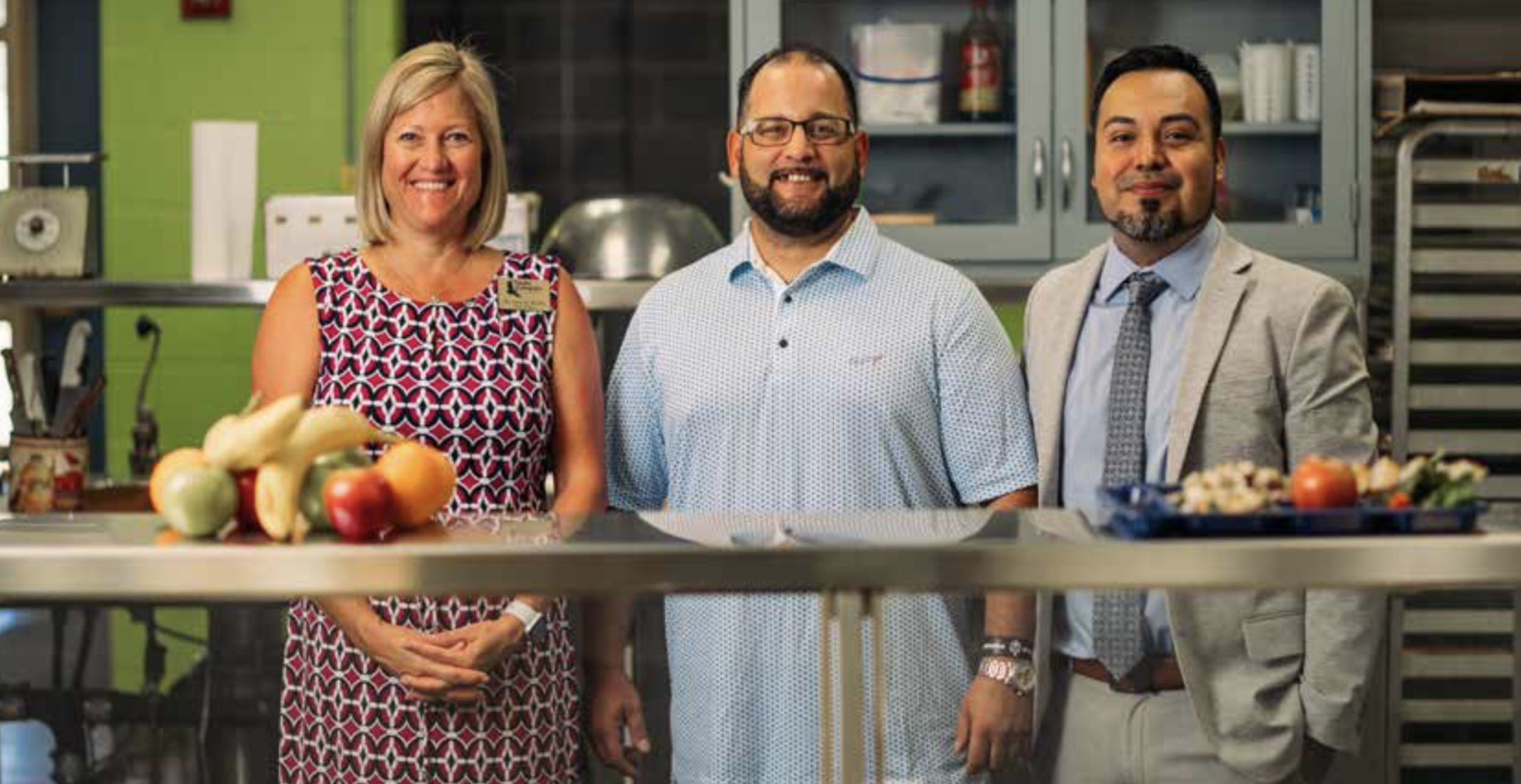
Unhoused individuals in Topeka often face daily isolation and uncertainty about where, when and how they can obtain basic necessities that most people take for granted—meals, hot showers, laundry facilities, clean socks and underwear, mental health services and preventive care. But thanks to the Mobile Access Partnership (MAP) comprising the Topeka Rescue Mission, Valeo Behavioral Health Care, Stormont Vail Health, the Shawnee County Health Department and the Topeka Police Department, they can now dependably receive an array of services every week to not only ease their burdens but facilitate stronger personal connections.
FACILITATING DIGNITY FOR THE UNSHELTERED
Bill Persinger, CEO of Valeo, said MAP has provided resources for the mental, physical and social well-being of individuals “carrying extra burdens including a lack of financial resources, trauma, mental illness and chronic family and health problems that have led to unemployment, addiction and other circumstances.”
After the Topeka Rescue Mission and Valeo worked with the Shawnee County Health Department in 2019 to secure portable toilets and handwashing stations for individuals living by the river, an idea began to form about a mobile shower and other services.
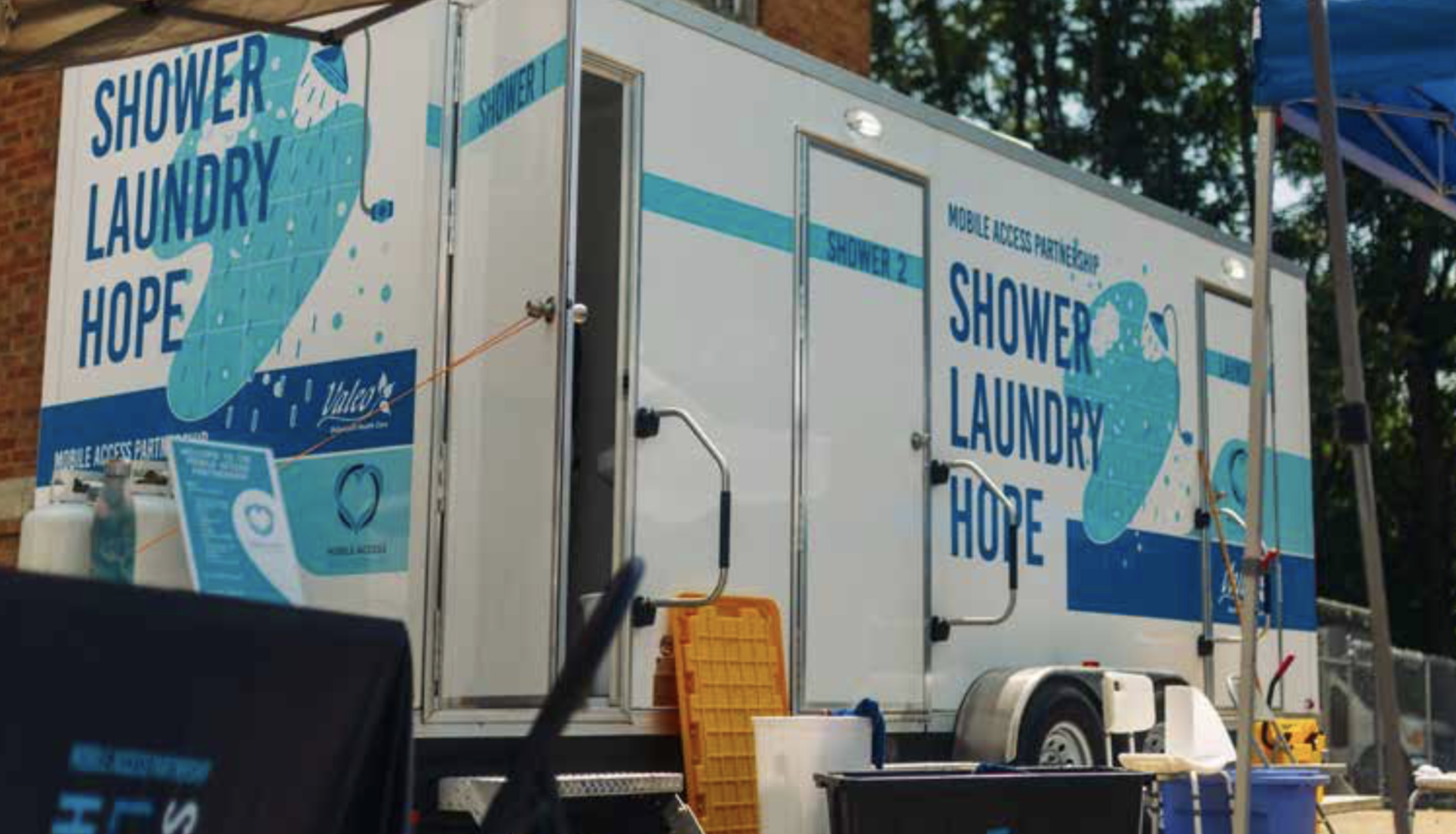
Valeo obtained the grant for the mobile shower and laundry trailer.
Aimee Copp-Hasty, corporate development director for Valeo, said, “Mobile showers for the homeless are very much a big city thing, so we were shooting for the stars to think we could get one in Topeka. Before the mobile unit, unsheltered individuals often had to clean up in convenience store or gas station restrooms. To see the relief on their faces when they leave the shower unit is so gratifying, especially since several of them come by to shower before they go to work.”
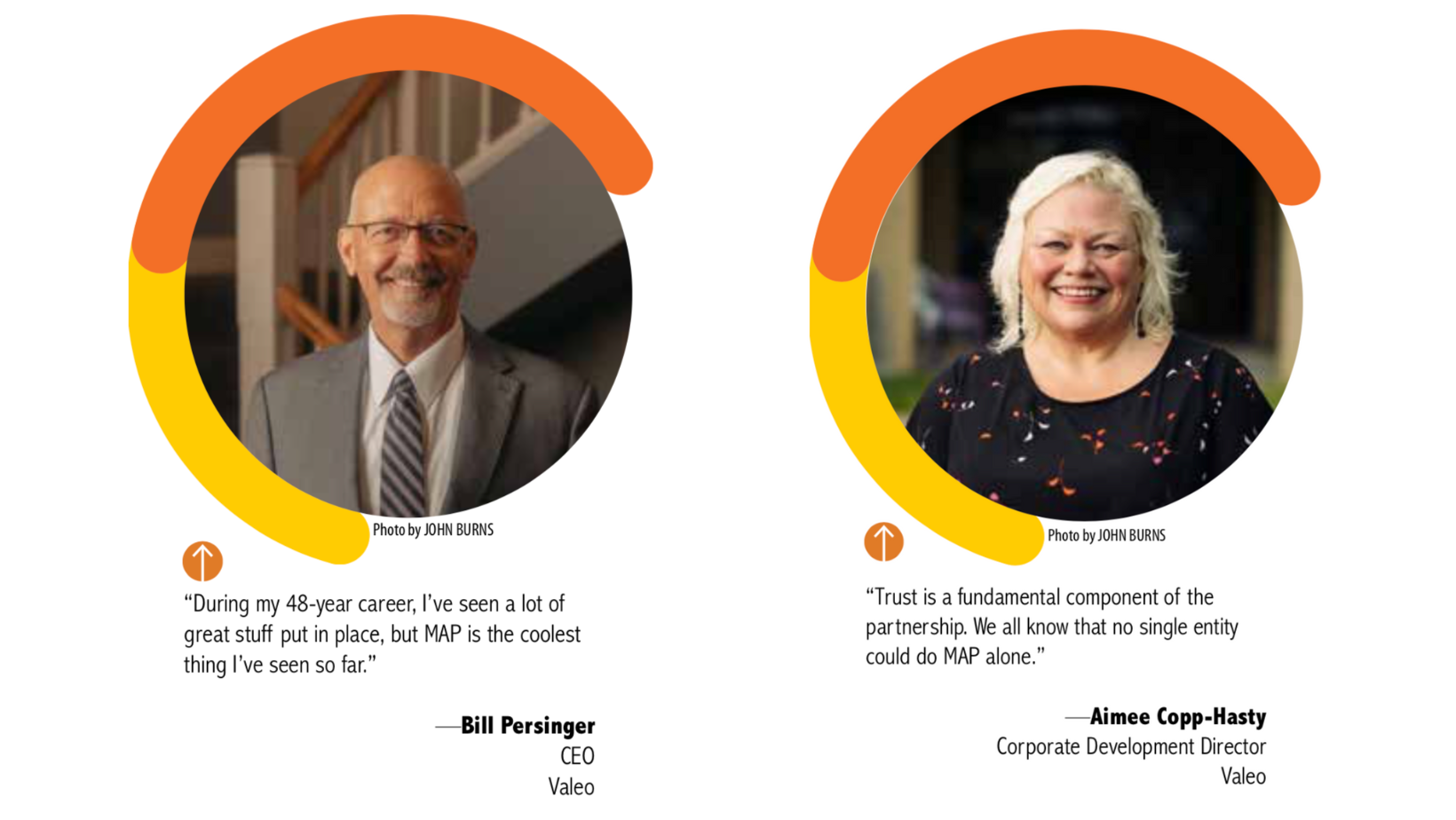
“Once we got the grant, we asked ourselves what if we could do a little more with the special partnerships we have with faith-based groups, local government and nonprofits, and the ideas spooled up quickly,” said Persinger. “Barry Feaker, former CEO of the Topeka Rescue Mission, has always said that progress moves at the speed of trust. Trust is a fundamental component of the partnership. We all know that no single entity could do MAP alone.”
Persinger said the unsheltered living population MAP serves extends not only to people sleeping outdoors on streets and under bridges, but also to those residing in abandoned trailers and campers or staying temporarily with friends and relatives who may not be able to provide lodging long term because of an individual’s mental state.
“A lot of people have come to realize that housing is a big part of health care,” he said. “Many people take vitamins and medication, but think about what that looks like for someone who doesn’t have a house. Capsules can melt in the heat and stick together, and the issue is compounded if they have prescriptions.”
Persinger said social determinants like zip code and lack of transportation to secure a job or have access to a grocery store offering fruits and vegetables can compromise health, but behavioral determinants like smoking and abusing alcohol and drugs often can be addressed with the right resources.
“Individuals may not be able to control where they live, but they may be able to modify their behavior with a supportive environment,” he said. “Through MAP, we’re altering the field by providing access to social services, health care, transportation and internet connectivity. We’re taking necessary services to places where the people who need them are.”
MAP partners are not aware of any similar collective and consistent service model for the unhoused elsewhere in the country. They have hosted several out-of-state visitors interested in replicating the partnership’s success in their own communities.
“During my 48-year career, I’ve seen a lot of great stuff put in place, but MAP is the coolest thing I’ve seen so far,” Persinger said. “We’re beating back the stigma about mental illness and homelessness and making it real for people who don’t work in this field every day. They can see that we’re helping people not only get their basic mental and physical health needs met, but also providing them with opportunities for greater independence.”
MAKING MAP POSSIBLE
MAP launched in May 2021 operating solely through grant and donations. Every Tuesday and Thursday morning between 9 a.m. and 3 p.m., partners set up trailers, trucks and tents in a church parking lot, and the Topeka Rescue Mission provides transportation for individuals who need it.
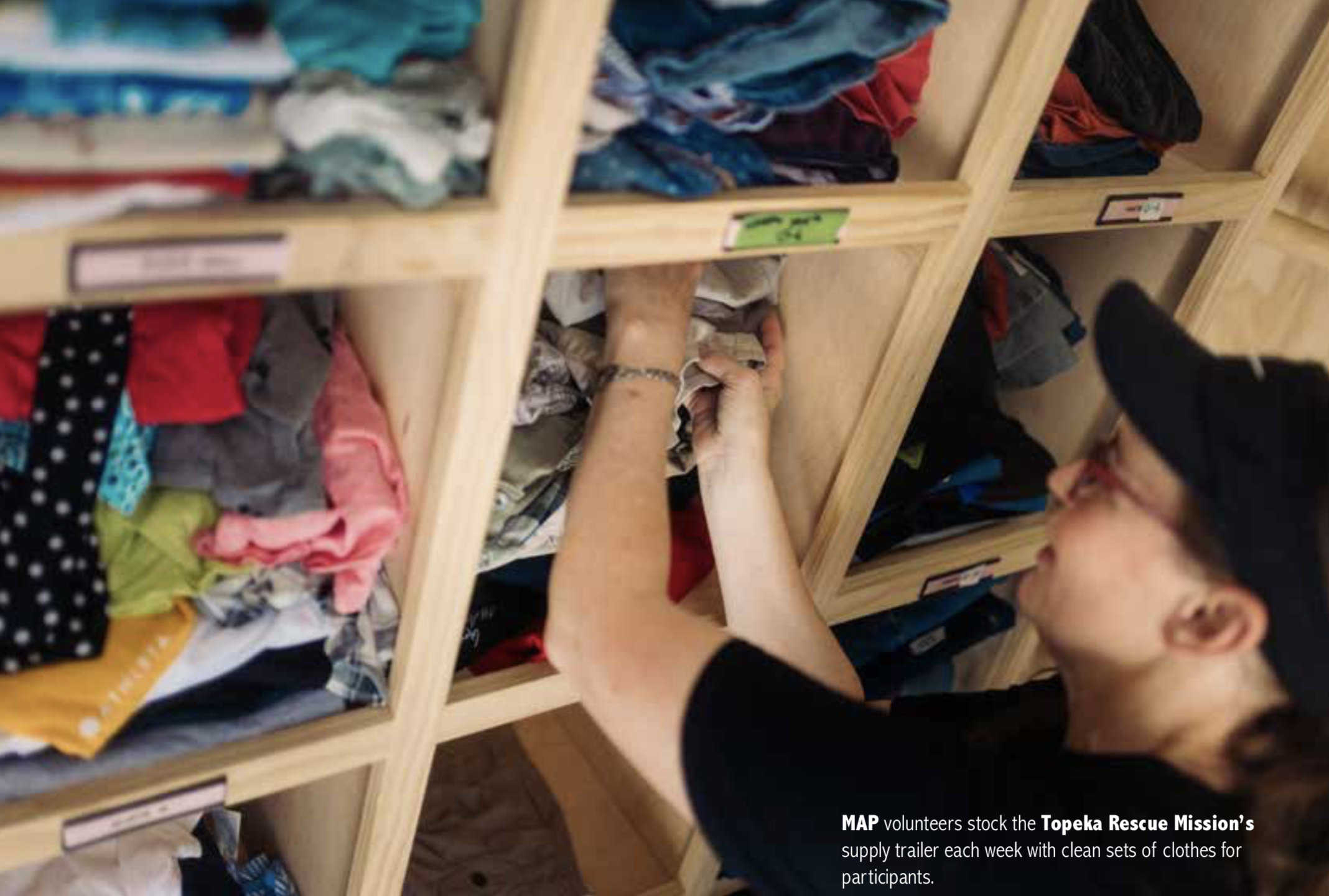
Participants can sign up for a 20-minute shower session in a two-stall trailer Valeo purchased through a Kansas Housing Resources Corporation grant. Beforehand they can select a clean set of clothes, including new socks and underwear, from a Topeka Rescue Mission supply trailer. Scotch Fabric Care Services launders their dirty clothes, which are available to be picked up the following week. Community members, volunteers, businesses and church and civic groups donate towels, wash cloths and hygiene items, and A-1 Rental pumps and dumps the wastewater.
The Topeka Rescue Mission serves hot breakfasts and lunches, Gatorade, coffee, and water. Its supply trailer is available for individuals seeking everything from shoes and flashlights to air mattresses and tents. Much of the inventory is obtained through grants or donated by local companies.
Valeo offers mental health screenings, COVID testing and case management services. They assis the Topeka Police Department in establishing city IDs for adults without driver’s licenses and Social Security cards.
Every Thursday, Stormont Vail’s ADA-accessible mobile unit provides preventive care and assessments.
Karla Hedquist, director of community health engagement for Stormont Vail, said 60 percent of an individual’s health can be attributed to social determinants, 20 percent to genetics and 20 percent to health care.
MAP allows the team to address multiple factors that influence health, including social isolation, transportation, cleanliness, and access to healthy food, through dependable“one-stop shopping” events, said Hedquist.
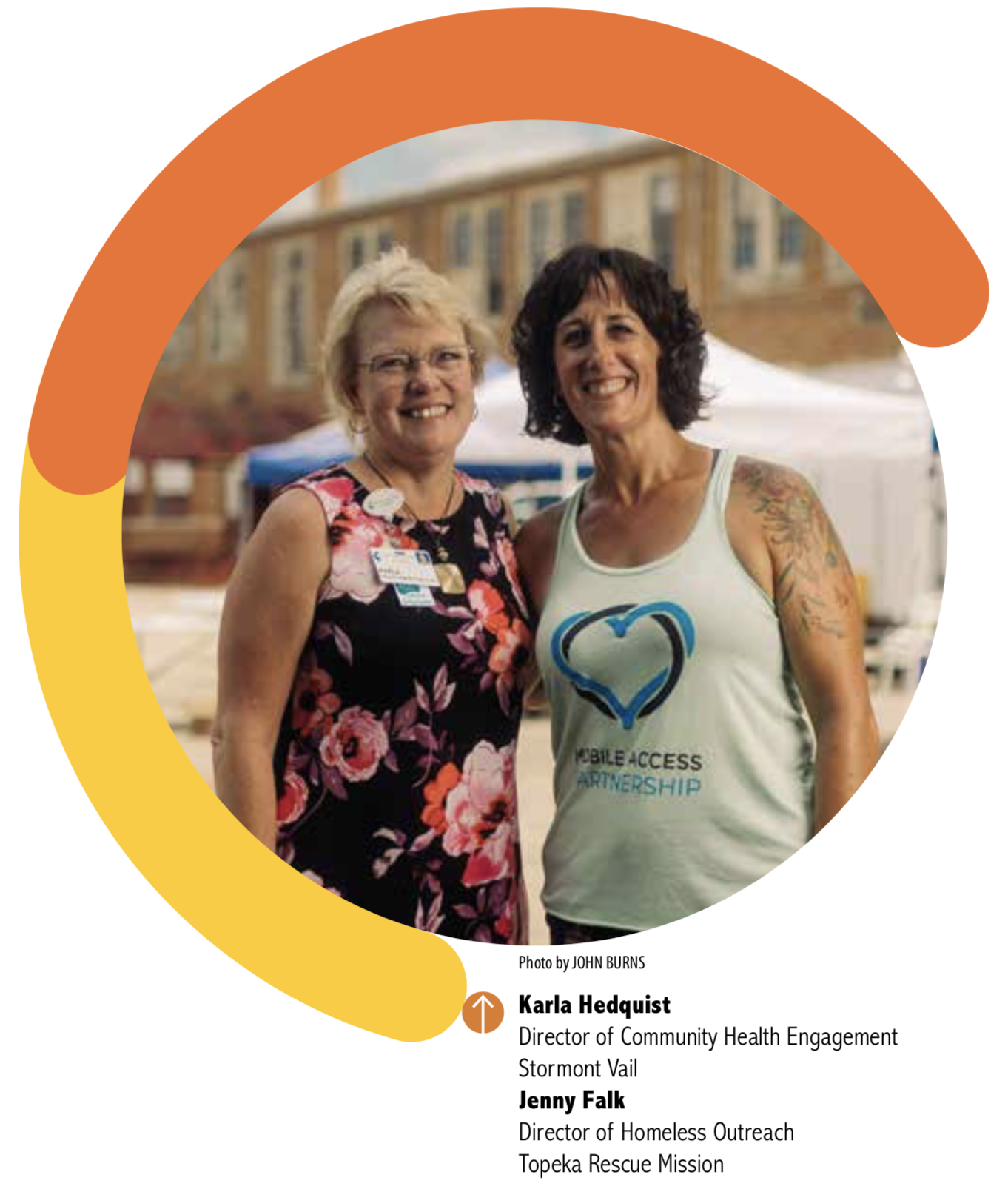
“Consistency is so important,” she said. “We show up even in extreme weather conditions when it’s extra hot or cold because that’s when they need us the most.”
Once a month, Kansas State University’s mobile veterinary unit arrives to care for pets through The Street Dog Coalition overseen by Allison Crow, DVM, and Hill’s Pet Nutrition provides dog food.
“It’s unbelievable how many people on the streets have pets and The Street Dog Coalition helps protect that bond to help with mental health. In some cases, these pets may be the only family they have, and the care the pets receive is positive for them too,” Copp-Hasty said.
Lifeline offers free cell phones with unlimited talk, text and data features, depending on carrier, to qualifying individuals. Wi-Fi and charging devices can be accessed onsite through equipment provided by the Topeka & Shawnee County Public Library.
Individuals can also pick up hygiene kits, snacks, pet food, sunglasses and other donated items.
“We’re all passionate about providing this program to a largely distrusting population,” Copp-Hasty said. “The people who come have had a lot of hardships and we are under constant pressure to continue week after week to make a difference in their lives.”
MEETING BASIC NEEDS
Jenny Falk, director of homeless outreach for the Topeka Rescue Mission, plans MAP routes, evaluates site feasibility for the program’s significant water and electricity needs and coordinates transportation throughout the day so individuals can come and go as they please.
“We have some sites that people can reach easily but others require transportation,” she said. “There’s always excitement when we pick people up and take them to the MAP site. It’s one consistent thing they can count on living in circumstances where there is not much consistency.”
Falk also coordinates relationships with participating churches and ensures that at least a half dozen volunteers are available to assist from 8:30 a.m. to 3:30 p.m. to set up and tear down the space and fulfill other needs.
Each MAP day, the Topeka Rescue Mission serves about 150 meals. A recent menu included biscuits and gravy, bacon and potatoes for breakfast and chili dogs, chips and Crumbl Cookies for lunch. Individuals who prefer not to shower but still want an additional set of clothes can receive items.
“We rely heavily on clothing donations from Doorstep and then fill in as we can,” Falk said.
The truck, stocked each week, typically runs short on men’s shoes, men’s small shirts and pants, women’s 3X sizes in all items and women’s ankle socks.
Referring to a “love the one in front of you philosophy,” Falk said, “Our MAP team members really care about the people we’re serving and strive to provide them with whatever they need in the moment. And if we can’t provide it, we take their requests and try to fulfill them the next time.”
Falk said it has been gratifying to see positive changes in participants’ demeanor through the provision of so many services in one setting.
“Being able to provide showers, clean clothes, hot meals and connection with others has helped them improve their quality of life and build relationships,” she said.
Between May 2021 and July 2022, 749 unique individuals received services through the partnership, which typically serves about 60 people each time.
“We’re seeing the results of what can happen when everyone does what it does best,” Copp-Hasty said. “Together we’re all stronger.”