

Local Company Pioneering the Use of a Bacteria and Making Global Impact
The company is pioneering the use of a bacteria that is native to a cow’s rumen, a part of the stomach, to manage diet transitions in cattle.
Company CEO Leander van der Walt describes Mega e(TM) as a natural product that helps cattle to stay healthy, while having a positive impact on meat and dairy production.
“Mega e alleviates many of the metabolic challenges that the animals face,” van der Walt said. “Seeing the impact it can make on performance first-hand is really exciting.”
Megasphaera elsdenii (or Mega e(TM)) was isolated from sheep rumen in England by Sydney Elsden in 1953. It’s a bacteria that metabolizes problematic lactic acid into propionic & butyric acids. Studies of well-adapted cattle showed higher numbers of Mega e in the rumen. Researchers hypothesized that inoculating the rumen with large populations of Mega e would help cattle adapt to high-grain diets and reduce the risk of acidosis, and tests have long established that Mega e helps regulate rumen pH and improve rumen health.
Bacteria to Business
Knowing that the bacteria was beneficial was only the first step, though. Researchers still had to figure out how to get the product to livestock producers. The bacteria was not shelf-stable, and it had to be delivered very quickly in order to be effective. Tina Greiman, Marketing Director for MS Biotec, points out that the company is not just selling a product, they have also developed the technology that it takes to produce a live, anaerobic, rumen-native bacteria and to make it available on a commercial scale to a global market.
“Mega e has been the focus of many researchers their entire careers, but the greatest challenge is producing it on a commercial scale,” Greiman said. “It is very difficult because Mega e is a sensitive, anaerobic bacteria, so working with it requires deep knowledge and understanding of the microbe itself. Our strain is Megasphaera elsdenii NCIMB 41125 which was specifically selected for its vigor, high growth rate and ability to thrive in a wide pH range. Additionally, MS Biotec had to design the production process in an anaerobic environment, which is incredibly difficult. MS Biotec and our affiliates are the only ones who have developed this expertise commercially.”
Van der Walt agreed that the original researchers were not thinking of the potential for profit as they studied the uses of Mega e.
“This is an organism that has been researched since the 1950’s,” he said, “but it wasn’t commercialized. No one was thinking about how to take the live organism to the customer. We had to develop the means to make this into a profitable business.”
After getting FDA approval to sell their product, a feat requiring quite a lot of paperwork, van der Walt said that the company first approached the problem of delivery with a liquid product, housed in kegs like those used for beer. Next, they used a boxed wine-type container. Because the amount needed by a farmer might vary, MS Biotec worked with an honor system meant to make the process as easy as possible for the customer.
“We needed to make sure that our problem with transporting the product did not become our customers’ problem,” van der Walt said. “We delivered an amount of product that we estimated would meet the need, and then asked customers to pay per dose at the end of the week. We needed great sales staff to communicate and make sure that not too much product was being wasted, but that we were also getting our customers the amounts that they needed.”
While MS Biotec worked to tweak their delivery and billing process, they also continued to work behind the scenes to produce a freeze-fried form of Mega e, which would solve many of the distribution problems that the company faced. After 7 years, they met the goal, giving them the ability to distribute the product to customers around the world.
How does Mega e work?
For over 50 years, US cattle have been raised in larger feedlots on high-concentrate diets. Cattle are transitioned to higher concentrate feed to provide them more energy to use for gain (feedlot cattle) and milk production (dairy). These high-concentrate diets can result in subacute or acute acidosis caused by lactic acid build-up in the rumen if the cattle are not properly adapted and managed.
“Feedlot cattle are typically transitioned to higher concentrate diets over a 3-4 week (or longer) period to allow the rumen to adapt and for the native Mega e population in the rumen to develop,” Greiman said. “This requires multiple rations, significant roughage, and extra management and labor. It’s effective but not that efficient. Dairy cattle are also transitioned to higher energy diets after calving to support milk production. This transition is metabolically challenging to the dairy cow and can result in acidosis and many other health problems.”
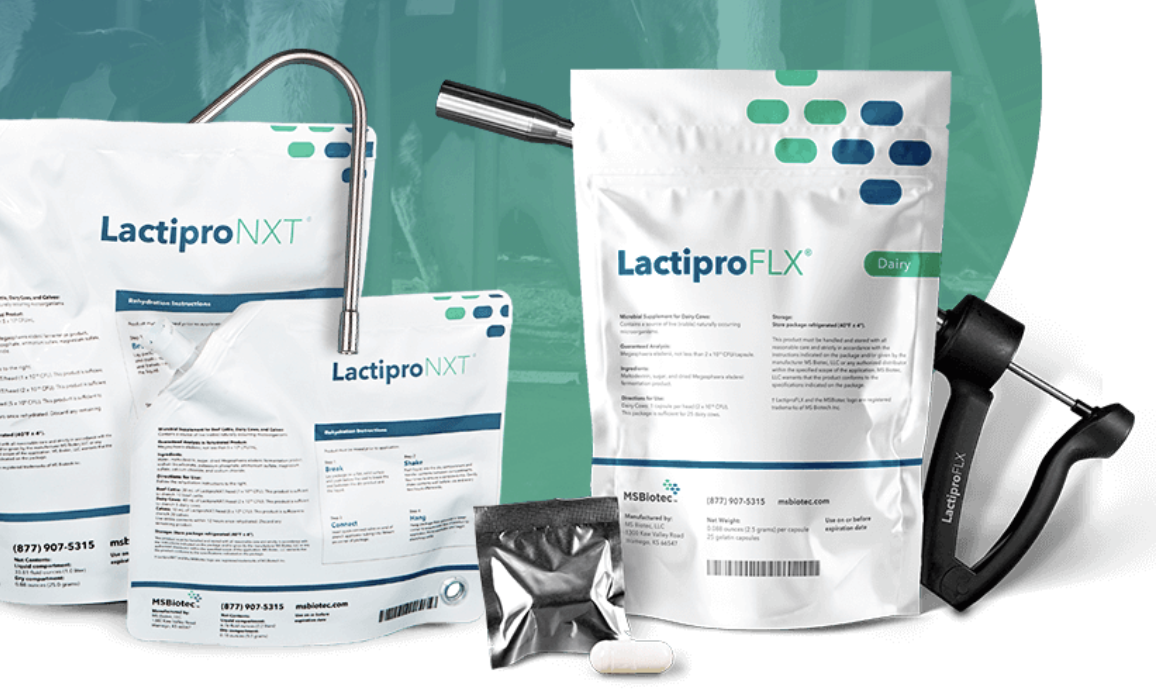
That’s where MS Biotec comes in. Their two new products, LactiproNXT and LactiproFLX, help feedlots and dairies transition cattle to higher concentrate diets faster and reduces the risk of acidosis. It can also be used with cows who are grazing crop residue, to help calves transition from milk to grain diets, and more. MS Biotec’s product does all of this by supplementing an existing microbiome, providing more Mega eTM at the time that animals need it.
Why Kansas?
Tina Greiman points out that Kansas is the perfect place to locate a business that is so closely tied to the cattle industry.
“MS Biotec is located in the heartland of America and in close proximity to many excellent universities and talented researchers,” Greiman said. “We are close to our customers – in the middle of the cattle-feeding corridor and in proximity to the top dairy producing regions.” Erin McGinness, Director of Human Resources & Environmental Health and Safety at MS Biotech, agrees that Kansas is an ideal location for the company.
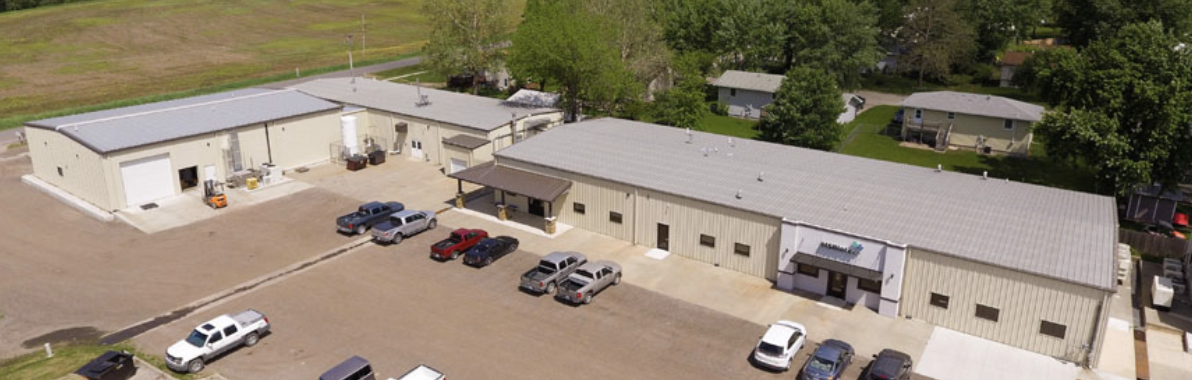
“Wamego is 15 minutes from Manhattan and 45 minutes from Topeka,” McGinness said. “We have a great location with easy access for shipping and receiving and room to expand. As we celebrate 10 years of business in Wamego, we have grown from a small warehouse to a very robust almost 30,000 square foot facility which encompasses the full life cycle of our products. We have state of the art laboratories coupled with proprietary production lines to serve our customers, and almost 80% of our personnel is based in Kansas.”
What’s next?
Now that MS Biotec can ship their product globally, the sky is the limit. Van der Walt says that in the future, the company may expand their work into other anaerobes with potential.
“We have a great pipeline with other species and product development,” van der Walt said, “and we have a great staff that can help us reach our goals.”